
Camassia quamash
Camassia quamash
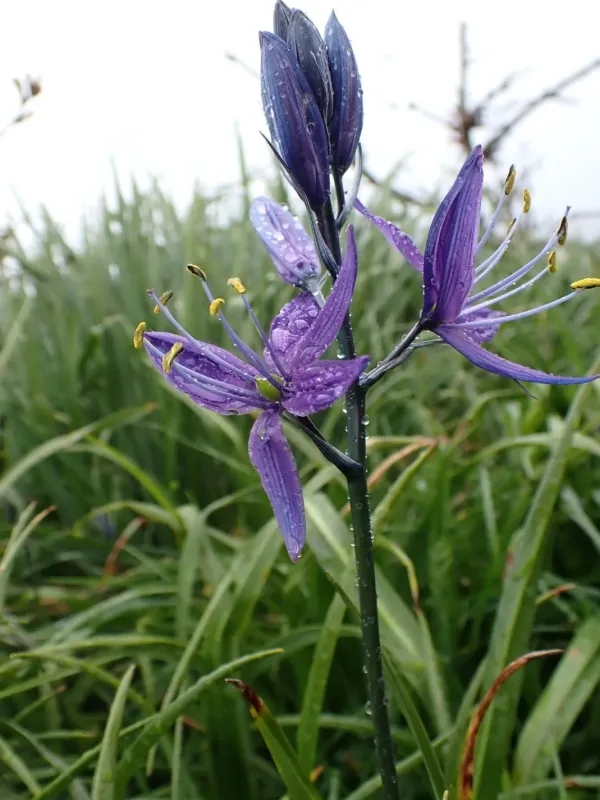
Description
Sowing dates
Planting of Camassia quamash bulbs is best conducted in the autumn, approximately one month before the ground freezes, allowing the roots to establish before winter dormancy.
For seed propagation, sowing should be done in late autumn or early winter in open ground, as the seeds require a period of cold stratification to germinate successfully in spring.
The planting depth for bulbs ranges from 10 to 15 centimeters, which is essential to protect them from fluctuating soil temperatures and frost heaving during the winter months.
Spacing between plants should be maintained at 15-20 centimeters, ensuring adequate air circulation and space for bulb expansion throughout the growing seasons.
As a member of the Asparagaceae family, Camassia quamash shows vigorous growth patterns when provided with appropriate site preparation and soil conditions at the time of sowing.
Growing requirements
Camassia quamash thrives in well-drained, moisture-retentive soils rich in organic matter, mimicking the meadow-like conditions of its natural habitat in North America.
The crop prefers full sun to partial shade; however, in regions with very hot summers, partial shade is recommended to prevent the soil from drying out excessively.
Soil pH should ideally be in the slightly acidic to neutral range, as extreme alkalinity can limit the availability of essential micronutrients required for healthy growth.
Regular moisture is crucial during the active spring growth period, but the site must have excellent drainage to prevent bulb rot during the summer dormant phase.
Applying a light mulch layer can help maintain soil moisture and moderate temperatures, which is particularly beneficial for young plantings in their first years of growth.
Yield
The primary agricultural value of Camassia quamash lies in its starchy, nutritious bulbs, which have been a traditional food source for indigenous populations for centuries.
Yield is determined by the size and density of the bulb clumps, which can be harvested after 2-3 years of uninterrupted growth to ensure significant biomass production.
In addition to food production, the crop serves as an ornamental asset, making it a dual-purpose species for small-scale growers interested in floral trade and specialty food markets.
Harvested bulbs require specific preparation, such as slow roasting, to convert inulin into digestible sugars, significantly increasing their culinary utility and caloric value.
Commercial production is currently limited by the time required for bulb maturation, positioning this crop as a specialized agricultural niche rather than a mass-market commodity.
Main diseases and pests
Common pests include onion flies and wireworms, which can cause significant damage by burrowing into the base of the bulbs, leading to stunted plant growth or death.
Excessive moisture in the soil is the leading cause of fungal infections, such as Fusarium rot, which can destroy an entire stand if drainage systems are inadequate.
Slugs and snails often pose a threat to the tender foliage during the early spring season, necessitating regular monitoring and appropriate integrated pest management strategies.
Maintaining a strict crop rotation and ensuring high-quality, disease-free starting material are the most effective ways to mitigate the risk of pathogen accumulation in the soil.
Rodents can also be problematic in certain regions, often consuming bulbs during the winter dormancy period, requiring protection measures like physical barriers.
Harvesting
Harvesting should be timed for the period after the foliage has fully turned yellow and withered, indicating that the bulb has reached maximum nutrient storage.
The use of garden forks is highly recommended for extraction to avoid slicing or bruising the bulbs, which reduces storage life and invites fungal contamination.
Once lifted, bulbs should be cleaned of loose soil and cured in a cool, shaded, and well-ventilated area to facilitate healing of any minor damage sustained during harvesting.
Storage requires cool and dry conditions to maintain bulb viability, ensuring that the moisture levels remain low enough to prevent sprouting or rot during the resting phase.
Periodic inspection of stored bulbs is essential to identify and remove any decaying specimens before they can spread infections to the rest of the crop batch.