
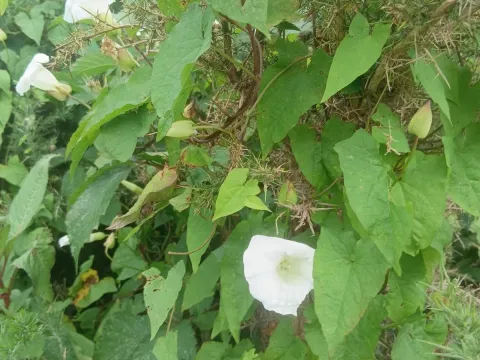
Bindweed
Calystegia R. Br.
Bindweed (Calystegia) is a genus of perennial flowering plants in the Convolvulaceae family. Known for their twining stems, these plants are highly aggressive colonizers of both cultivated and wild areas.
What the section contains

Bindweed
In agriculture, Calystegia is widely recognized as a serious weed that competes for essential resources such as water, soil nutrients, and sunlight in major crop fields.
The genus has a cosmopolitan distribution, thriving across various climate zones in the Northern and Southern Hemispheres, showing high plasticity to soil types.
Botanically, they are characterized by large funnel-shaped flowers and rhizomatous roots that can extend deep into the soil profile, ensuring survival throughout the winter.
The plant relies on vigorous vegetative expansion, which makes it one of the most persistent threats in cereal, vegetable, and orchard production systems.
While various insect species may graze on bindweed foliage, they are generally ineffective at suppressing the plant population on a commercial scale.
Fungal diseases like powdery mildew can affect the plant during humid seasons, causing localized necrosis without effectively controlling the deep-seated root network.
Management of Calystegia requires a combination of strategies, primarily focusing on the use of systemic herbicides during the plant's active growth stage.
Mechanical cultivation can be counterproductive if the rhizomes are fragmented, as each piece has the potential to develop into a new, independent plant.
Integrated weed management programs often incorporate cover crops and specific crop rotations to outcompete bindweed during the early stages of its development.