
Calyptrocalyx spicatus
Calyptrocalyx spicatus
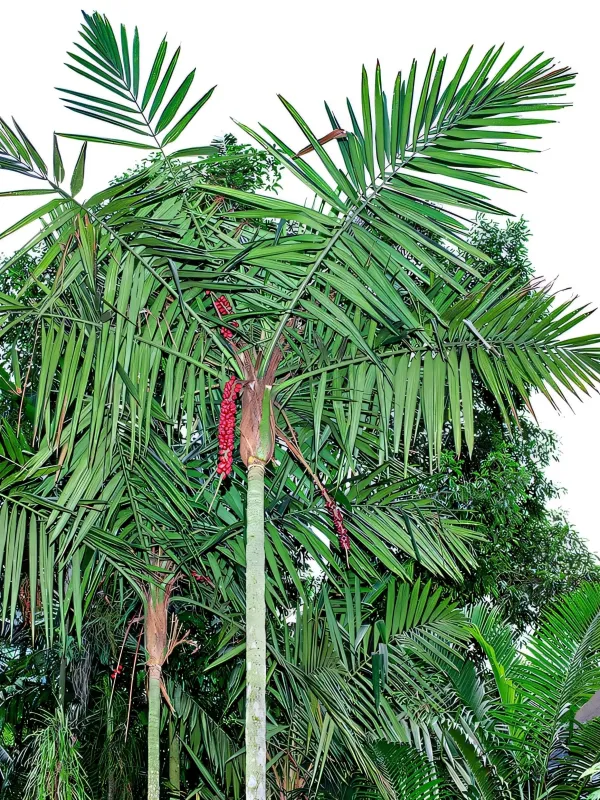
Description
Sowing dates
Propagation of Calyptrocalyx spicatus via seeds requires precise timing, as the seeds have a very limited shelf life. Sowing should be carried out immediately after collection in a warm, humid environment to maximize germination rates.
A well-draining medium, such as a mix of peat moss and perlite, is essential to prevent seed decay. Seeds should be sown at a depth of about 1 to 2 centimeters to ensure enough moisture retention while allowing the shoot to emerge efficiently.
Maintaining a constant soil temperature of approximately 26 to 28 degrees Celsius is critical. The use of heated germination mats is highly recommended to mimic the tropical conditions of the plant's native habitat in New Guinea.
Germination is often asynchronous and can take several weeks or even months depending on the freshness of the seed. During this time, the soil must be kept moist but never saturated to prevent damping-off diseases.
Seedlings should be moved into individual pots as soon as they develop their first true leaf. Handle with care, as the root system is delicate, and use a sterile, high-quality potting mix to support healthy initial growth.
Growing requirements
Calyptrocalyx spicatus is an elegant palm belonging to the Arecaceae family, endemic to the rainforests of New Guinea. It thrives in shaded environments, necessitating protection from direct, harsh sunlight to prevent foliage burn.
The ideal temperature for this species remains between 20 and 25 degrees Celsius. It does not tolerate cold snaps or drafts, which can cause significant physiological stress and leaf drop in mature specimens.
Soil requirements involve a rich, slightly acidic mix that provides excellent aeration while retaining consistent moisture. Organic matter, such as leaf mold or bark, is beneficial for mimicking the forest floor environment.
Irrigation must be frequent enough to maintain steady soil moisture. However, the plant requires excellent drainage to ensure that excess water does not accumulate around the roots, as this is a common cause of failure.
Relative humidity should be maintained at a minimum of 60 percent. In interior cultivation, frequent misting or the use of automated humidification systems is essential for preventing brown tips and promoting lush growth.
Main diseases and pests
Spider mites are the most common pest, especially in dry greenhouse conditions. Regular inspection of the underside of leaves and keeping humidity levels high are the best preventative measures against these pests.
Scale insects can infest the stems and leaves, extracting plant sap and weakening the palm. Mechanical removal or the application of horticultural oils is often sufficient for small infestations if detected early.
Fungal leaf spot diseases are frequently caused by poor air circulation or water droplets remaining on the leaves for too long. Improving ventilation and keeping the foliage dry after watering are effective preventive strategies.
Root rot, driven by overwatering and lack of oxygen in the substrate, can be fatal. If detected, repotting the plant into fresh, dry soil and pruning affected roots is necessary for recovery.
Nutritional deficiencies, manifesting as chlorosis, are common if the pH of the soil is too high or if micronutrients are lacking. Regular applications of a balanced, palm-specific fertilizer with magnesium and iron help maintain vibrant foliage.