
Calyptrocalyx elegans
Calyptrocalyx elegans
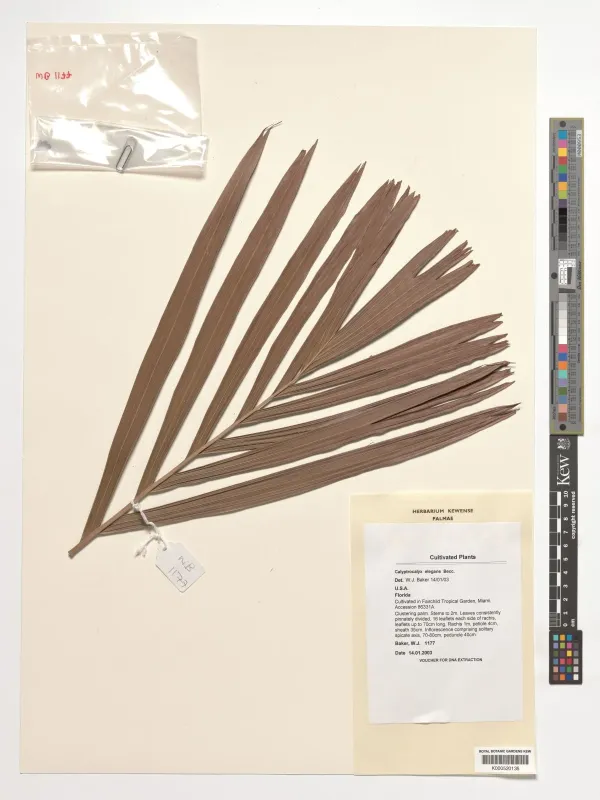
Description
Growing requirements
Calyptrocalyx elegans is an elegant palm species belonging to the Arecaceae family, native to the tropical rainforests of New Guinea. It is highly valued in horticulture for its distinct foliage and slender, attractive growth habit.
To thrive, this plant requires a consistent environment with temperatures ideally ranging between 20°C and 28°C. It is extremely sensitive to cold drafts and rapid temperature fluctuations, which can cause significant stress to the foliage.
Soil requirements involve a well-draining, nutrient-rich potting medium. A mixture of peat, perlite, and coarse organic matter is recommended to ensure both moisture retention and adequate aeration for the sensitive root system.
High relative humidity is essential for the healthy development of this palm. In indoor environments or greenhouses, regular misting or the use of humidifiers is necessary to mimic the natural rainforest conditions of its native habitat.
Light levels should be kept at moderate, indirect exposure. The plant flourishes in filtered sunlight or partial shade, as harsh direct rays can quickly scorch the delicate leaves and inhibit photosynthesis.
Main diseases and pests
Spider mites are the most common pest threats, particularly when the ambient air humidity drops below acceptable levels for extended periods.
Scale insects can also infest the palm, attaching themselves to the stems and leaf undersides, extracting sap and reducing the plant's overall vitality.
Root rot, caused by overwatering or poorly aerated substrate, is the primary pathological threat to Calyptrocalyx elegans, often leading to rapid decline.
Fungal leaf spots may appear if air circulation is insufficient, leading to stagnant pockets of moisture around the foliage, especially in dense greenhouse settings.
Preventative measures should include regular cleaning of leaves and the application of balanced organic pesticides during the onset of the growing season to minimize infestation risks.