
Calocephalus francisii
Calocephalus francisii
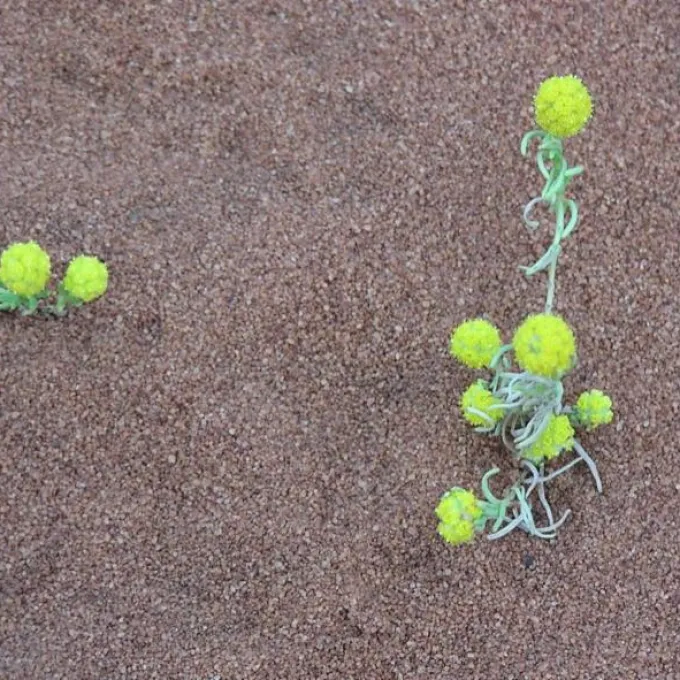
Description
Growing requirements
Calocephalus francisii is a distinct member of the Asteraceae family, recognized for its striking silver-white appearance. Native to the arid regions of Australia, this semi-shrub has evolved to thrive in environments with severe water scarcity and intense solar radiation.
Botanically, the plant is characterized by a dense, branching habit covered in fine, felt-like hairs. These hairs serve a dual purpose: they reflect excessive sunlight and act as a barrier to reduce transpiration, helping the plant maintain its water balance in desert climates.
Optimal growth requires soil that is extremely well-draining, such as sandy or gravelly loam. The species is highly susceptible to root rot if placed in heavy, water-retentive soils, making excellent drainage the most critical requirement for long-term survival.
As a sun-loving plant, it requires full sun exposure to maintain its compact shape and vibrant color. Any degree of shade will cause the plant to become leggy and lose its characteristic silver pigment, which is essential for its ornamental value.
The climate requirements for this culture are strictly Mediterranean or arid-subtropical. It does not tolerate freezing temperatures or high humidity, which can lead to fungal issues and premature death of the foliage.
Harvesting
The primary agricultural and horticultural use of Calocephalus francisii is in xeriscaping and drought-tolerant garden design. It serves as an excellent structural plant that provides year-round color and contrast against green-foliage perennials.
Propagation is primarily achieved through stem cuttings. Using a sterile, sandy medium is essential during the rooting phase, as excessive moisture in the propagation tray will often lead to failure before the roots develop.
In the cut-flower industry, this plant is valued for its longevity and unique texture. It is frequently incorporated into minimalist and modern floral arrangements where it can persist as a dried element for extended periods.
Pruning is a necessary maintenance task that should be performed to maintain the intended shape of the shrub. By selectively removing older growth, the gardener can encourage a denser branching pattern that results in a more robust and attractive plant.
For ornamental harvesting, growers focus on collecting stems once they have matured and established a solid structure. Stems should be kept dry and stored in a ventilated area to ensure they retain their silver hue and do not degrade due to mold.