
Lemon Beauty Heads
Calocephalus citreus
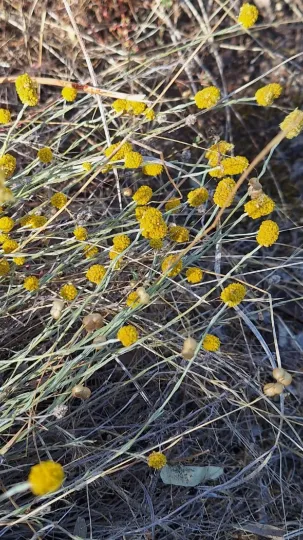
Description
Sowing dates
Calocephalus citreus, commonly known as Lemon Beauty Heads, belongs to the Asteraceae family. This perennial plant is native to arid regions of Australia, making it a unique species for specific horticultural applications and landscape design.
Propagation is typically carried out via seeds sown in early spring. The germination process requires a well-draining substrate, such as a mixture of sand and peat, kept at a constant temperature of 20°C.
Seedlings should be moved to individual pots as soon as they reach a transplantable size. Providing bright, indirect light is essential during the early stages of growth to prevent the stems from becoming weak or elongated.
Transplanting into the permanent location should only occur after the risk of frost has passed completely. The plants require a period of acclimatization to avoid transplant shock when moved from a greenhouse environment to the outdoors.
Spacing is a crucial factor for this culture. Placing the plants too close to one another restricts air circulation, which is vital for preventing moisture-related issues within the dense, textured foliage.
Growing requirements
This species is highly adapted to full sun exposure. It requires at least six to eight hours of direct sunlight daily to maintain its structural integrity and characteristic coloration of the foliage.
Soil requirements are strict: the medium must be lean, sandy, and exhibit excellent drainage properties. High levels of organic matter or heavy clay soils will almost certainly lead to root rot and plant death.
Water management is the most critical aspect of the plant's agronomy. Irrigation should be minimal, performed only when the root zone is completely dry. Drought tolerance is a key biological trait of this species.
The plant thrives in neutral to slightly alkaline soil pH levels. Fertilization should be kept to a bare minimum, as excessive nutrients encourage soft, succulent growth that is susceptible to environmental stress and pests.
During the winter, the plant must be protected from freezing temperatures. It is often treated as an annual in cooler climates or moved to a bright, frost-free location if kept as a perennial in containers.
Main diseases and pests
Fungal diseases related to excessive moisture are the primary threat to the health of Calocephalus citreus. Root and stem rots can develop rapidly if the drainage system is compromised or if the plant is overwatered.
In terms of pests, spider mites can be problematic in dry, stagnant air conditions, particularly when the plants are overwintered indoors. Monitoring the undersides of the foliage is necessary to detect early infestations.
Air circulation acts as the best natural defense against most pathogens. Ensuring that the foliage does not remain wet for extended periods, especially during cool or cloudy weather, is an essential preventative measure.
Mechanical damage to the roots during weeding should be avoided, as it creates entry points for soil-borne pathogens. Maintaining a clean mulch layer, perhaps using inorganic materials like grit, can protect the stem base.
If chemical interventions are necessary, always select fungicides or pesticides specifically labeled for ornamental use and test on a small area first to ensure no phytotoxic damage occurs to the unique leaf surface.