
Callianthemum pimpinelloides
Callianthemum pimpinelloides
Description
Growing requirements
Callianthemum pimpinelloides belongs to the Ranunculaceae family and is a distinctive perennial herb native to the mountain ranges of Europe. This species is specifically adapted to the harsh conditions of alpine meadows and scree slopes, which determines its high aesthetic value and specific ecological requirements.
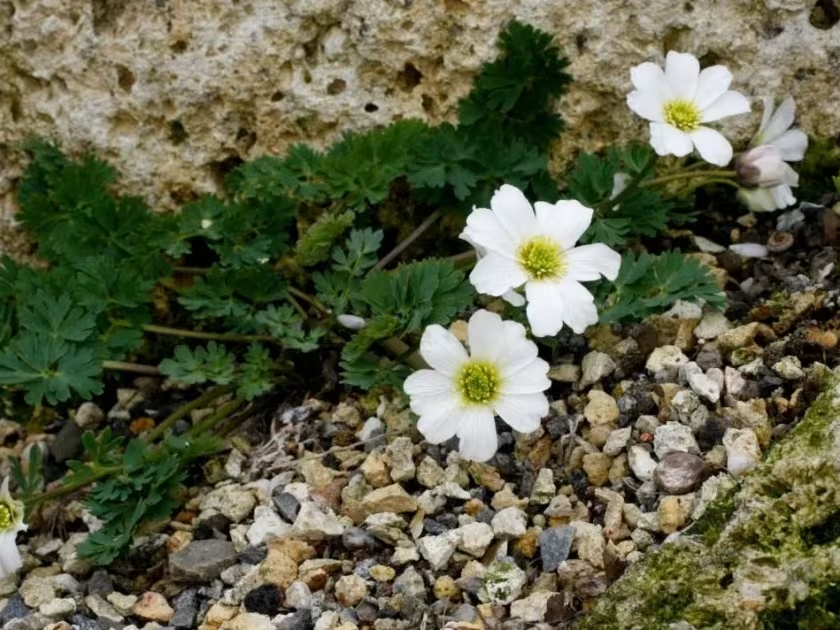
Botanically, the plant features a low-growing rosette of fine, bipinnate foliage that resembles the leaves of the burnet plant. In early spring, the plant produces solitary, anemone-like white or pale pink flowers that emerge on short, sturdy stems, creating a striking visual display in early season landscapes.
Cultivation requires conditions that mimic the natural high-altitude environment. The soil must be exceptionally well-draining, gritty, and lean. A neutral to slightly alkaline pH is preferred, as high moisture levels combined with heavy soil will almost inevitably lead to crown rot.
The plant thrives in full sun but appreciates some light shade during the hottest part of the day in warmer climates to prevent root desiccation. Given its alpine origin, it is highly winter-hardy, although it requires protection from excessive moisture during the dormant winter period.
In landscaping, it is primarily used as a specimen plant in specialized rock gardens, troughs, or alpine houses. Its compact nature and delicate structure make it a prized plant for collectors interested in alpine flora and early spring interest in rockeries.
Main diseases and pests
The most significant threat to Callianthemum pimpinelloides is moisture-related fungal infections. Poor drainage in the substrate will quickly lead to fungal pathogens attacking the crown and roots, which can be fatal for the plant within a single season if not addressed.
Pests such as aphids can occasionally infest the plant during the spring flush of growth. These insects cluster on the flower buds and tender stems, potentially spreading viral diseases and weakening the plant's overall vigor through sap depletion.
Slugs and snails present a seasonal challenge, particularly in humid climates. They may graze on the soft foliage, which ruins the aesthetic appeal and creates wounds that can become entry points for secondary bacterial or fungal infections.
Weed competition is a critical factor for the survival of this slow-growing perennial. Invasive weeds can quickly shade out the small rosettes, depriving the plant of necessary nutrients and creating a stagnant microclimate around the foliage.
Preventative measures include utilizing a coarse mulch, such as gravel, to keep the foliage away from direct contact with wet soil. If an outbreak occurs, targeted applications of organic-approved pesticides or fungicides should be performed strictly according to local agricultural guidelines.