
Calliandra calothyrsus
Calliandra calothyrsus Meisn.
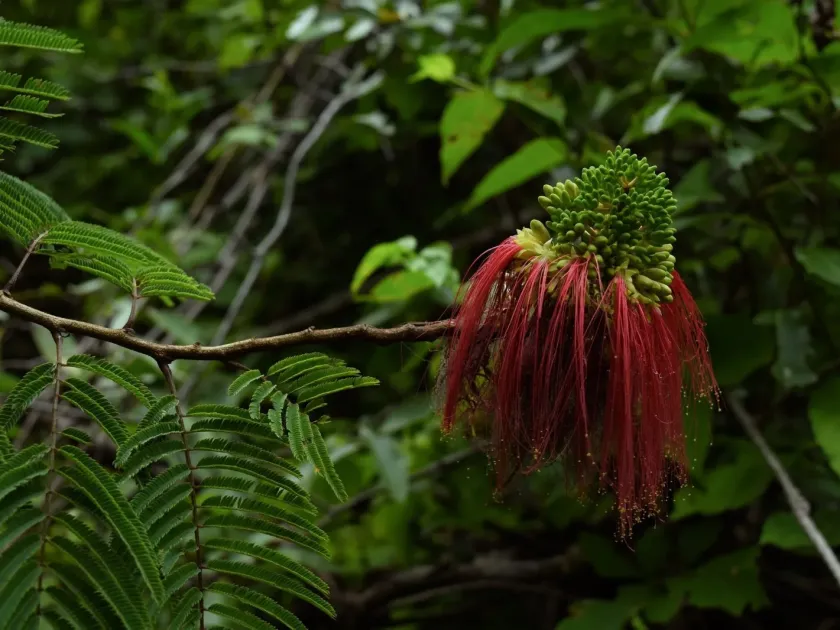
Description
Sowing dates
Propagation of Calliandra calothyrsus is primarily done through seeds. Seed coat dormancy is common, so scarification by soaking in hot water is recommended to improve germination rates.
Seeds are often sown in nursery beds or containers first to ensure healthy seedlings before transferring them to the permanent planting site.
The best time for field planting is at the beginning of the rainy season, which provides the necessary moisture for the plants to establish their root systems.
Spacing depends on the intended use; for erosion control, closer spacing is preferred, while for fuelwood production, wider spacing is generally used.
Effective weed control during the establishment phase is essential as the species is sensitive to competition from aggressive grasses and weeds.
Growing requirements
Calliandra calothyrsus is a tropical shrub belonging to the Fabaceae family, prized for its exceptional growth rate and adaptability to various soil types.
It thrives in humid tropical climates with annual rainfall ranging from 1000 mm to 3000 mm, though it can withstand short dry seasons once established.
The plant prefers acidic, well-drained soils and is highly valued for its ability to grow on degraded lands, contributing to soil reclamation.
Being a shade-intolerant species, it requires full sunlight to achieve its maximum biomass production potential and to maintain healthy growth.
Its ability to fix nitrogen through symbiotic bacteria reduces the need for chemical fertilizers, making it a sustainable choice for agroforestry systems.
Yield
This species is highly productive, capable of yielding 20 to 40 tonnes of dry biomass per hectare per year under optimal growing conditions.
While the foliage is rich in protein, its use as animal fodder should be limited due to the presence of condensed tannins, which can affect digestibility.
The wood is excellent for firewood and charcoal production, characterized by its high calorific value and fast regeneration after cutting.
Yields can be maximized through regular pruning, which promotes the growth of new, vigorous branches and maintains the shrub in a juvenile state.
Productivity typically remains high for about a decade, after which the plants might need to be replanted or coppiced heavily to encourage renewal.
Main diseases and pests
Calliandra calothyrsus is generally resilient, but it can be susceptible to certain pests and diseases, particularly in dense plantations.
Fungal infections, such as root rot, may occur if the soil is waterlogged or if there is poor drainage within the cultivation area.
Various insects, including defoliators and borers, can attack the plant, although damage is usually manageable through proper site maintenance.
Ensuring proper ventilation and avoiding excessive plant density are the best defensive measures against common pathogens.
In cases of severe infestation, Integrated Pest Management (IPM) strategies are recommended to maintain the health of the biomass crop.
Harvesting
The first harvest can typically be conducted 6 to 12 months after planting, depending on the growth rate in the specific environment.
Harvesting involves cutting the stems at a height of 30 to 50 cm, which encourages the plant to resprout vigorously from the remaining stump.
Multiple harvest cycles are possible per year, making it an efficient crop for continuous biomass or fodder production.
Tools used for harvesting should be sharp to prevent unnecessary tissue damage, which can lead to decay or reduced regeneration potential.
Post-harvest handling is critical, as green biomass should be processed or dried promptly to maintain nutritional quality and prevent rotting.