
Yellow Cowslip Orchid
Caladenia flava
Description
Growing requirements
The Yellow Cowslip Orchid (Caladenia flava) is a terrestrial orchid species within the Orchidaceae family. It is endemic to the southwest corner of Western Australia, where it thrives in varied habitats ranging from woodlands to sandy scrublands.
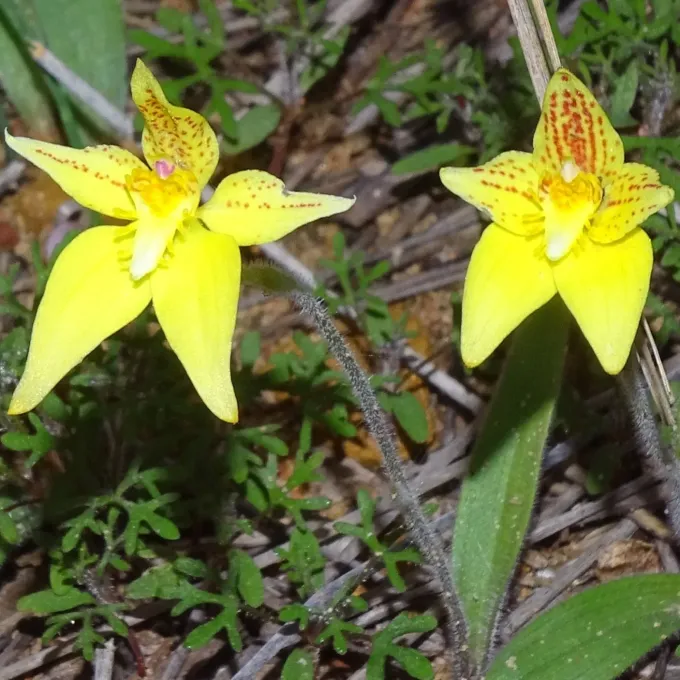
Botanically, the plant features a single, hairy, basal leaf emerging from a small subterranean tuber. The flowering stalk typically produces one to three vibrant yellow flowers, often adorned with dark red or brownish markings, which make it highly distinctive among other native orchids.
Cultivation requirements for this species are demanding, as it relies on specific soil compositions. It prefers light, well-draining, sandy soils that mimic its natural habitat's nutrient-poor conditions. Achieving proper drainage is the most critical factor to prevent tuber rot.
The climate must mirror a Mediterranean pattern, characterized by a distinct wet growing season followed by a completely dry dormancy period. During the dry season, the orchid requires no water to ensure the survival and development of its tuber for the next cycle.
Commercially, Caladenia flava is not considered a traditional agricultural crop. Its use is limited to specialty botanical collections and rare plant nurseries. Because of its complex symbiotic relationship with soil mycorrhizal fungi, it remains challenging for non-specialist growers.
Main diseases and pests
The most significant threat to the Yellow Cowslip Orchid is root and tuber rot, primarily induced by improper moisture levels. Overwatering, especially during the plant's natural dormancy phase, is almost always fatal to the specimen.
Pests such as spider mites and aphids are common threats in protected environments. These pests tend to congregate on the underside of the leaf or near the developing flower buds, causing stunted growth and physical damage.
Environmental degradation, including land clearing and the introduction of invasive weed species in its native range, poses a severe threat to wild populations. Loss of specific fungal symbionts in the soil can also lead to the decline of entire colonies.
Inappropriate use of fertilizers can lead to chemical burn of the roots. Since this orchid is adapted to nutrient-poor environments, excessive mineral application disrupts its biological balance and suppresses its development.
Effective management requires rigorous adherence to environmental hygiene and precise climate control. Ensuring good airflow around the plant helps mitigate the risk of fungal outbreaks, which are the primary reason for failure in cultivation.