
Brazilwood
Caesalpinia echinata Lam.
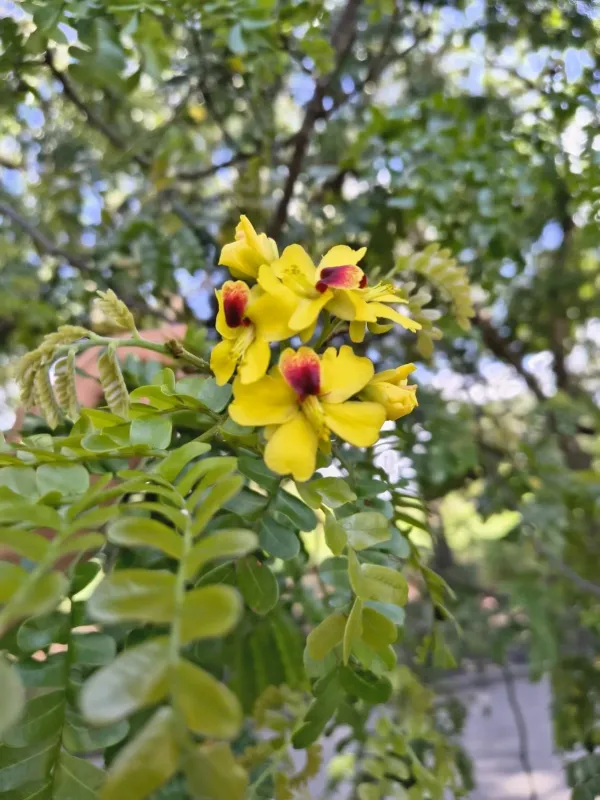
Description
Growing requirements
Brazilwood (Caesalpinia echinata), belonging to the Fabaceae family, is a slow-growing tropical tree native to the Atlantic Forest regions of Brazil. It is famous for its dense, orange-red timber, which was historically the primary source of red dye.
The species requires a humid tropical climate to thrive. It performs best in regions where temperatures remain consistently warm throughout the year, and it does not tolerate frost or low-temperature stress at any stage of its development.
Botanically, the tree is characterized by its thorny trunk and branches, which act as a defense mechanism. It features compound pinnate leaves and fragrant yellow flowers, which bloom to produce woody pods containing seeds once pollinated.
Soil requirements include well-drained, nutrient-rich substrates. While it adapts to various soil types, it performs best in deep soils that maintain constant moisture without becoming waterlogged. Proper site selection is crucial to avoid root decay.
In terms of usage, the wood is highly prized for its durability and acoustic properties. It is the gold standard for crafting violin and cello bows. Additionally, the tree plays a vital role in ecological restoration projects within its native range.
Main diseases and pests
Root pathogens are the primary biological threat to Brazilwood, particularly in young plantations. Excessive moisture or poor drainage can lead to the proliferation of fungi, which attack the root system and inhibit nutrient uptake.
Insect pests such as borers and defoliators represent a significant challenge for forest management. These pests can cause structural damage to the trunk or severe foliage loss, which is detrimental to the slow-growing tree.
Management of these threats involves careful irrigation practices and the maintenance of soil aeration. Avoiding over-fertilization with nitrogen is also recommended to prevent excessive succulent growth that attracts pests.
Competitive weeds pose a threat to seedlings by shading them and competing for soil moisture. Regular mechanical weeding around the base of the trees during the first few years of growth is essential for survival.
Biosecurity measures are necessary to prevent the introduction of regional pests into new planting areas. Constant monitoring and the use of healthy, nursery-grown seedlings are the most effective strategies for maintaining a sustainable plantation.