
Divi-divi
Caesalpinia coriaria (Jacq.) Willd.
Description
Growing requirements
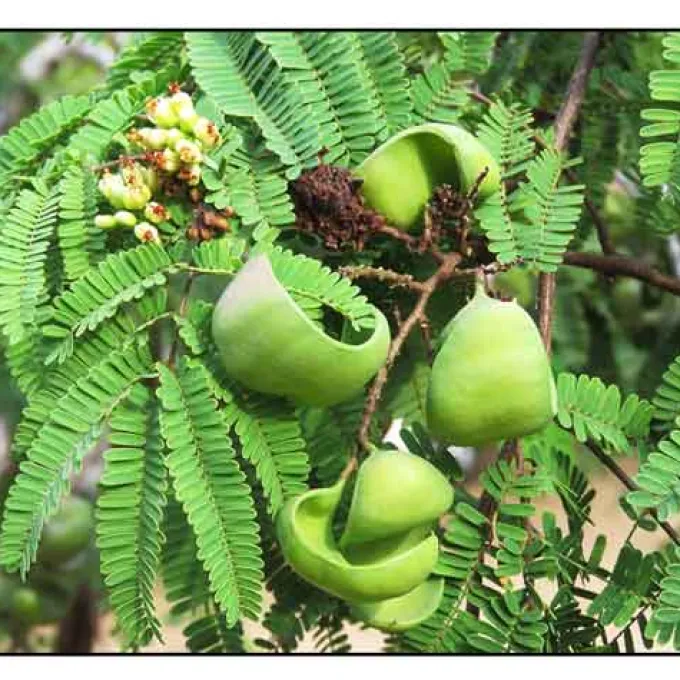
Caesalpinia coriaria, commonly known as divi-divi, is a hardy leguminous tree or large shrub indigenous to the tropical regions of the Americas. Belonging to the Fabaceae family, it is scientifically recognized for its unique curved seed pods which serve as a critical agricultural commodity.
The plant thrives in arid and semi-arid climates, demonstrating remarkable drought tolerance. It is naturally adapted to coastal and lowland areas where high temperatures are constant and rainfall is often restricted to a short wet season.
Successful cultivation requires full exposure to direct sunlight. The species performs poorly in shaded environments, which often leads to thin growth and reduced pod production. Optimal soil conditions are sandy or loamy textures that provide excellent drainage, as the species is highly sensitive to waterlogged roots.
The tree exhibits physiological adaptations to conserve water, including the ability to drop leaves during severe moisture deficits. When establishing new plantations, it is crucial to ensure that young seedlings are protected from competitive weeds and have enough space for deep root development.
Soil pH preference is relatively neutral to slightly alkaline. The plant is noted for its ability to grow on saline soils where many other economic crops would fail, providing a strategic option for utilizing marginal agricultural land in tropical zones.
Yield
The economic value of divi-divi is concentrated in its pods, which are prized for their high tannin content, often ranging from 30% to 50%. These tannins are highly effective for tanning leather, producing products with superior durability and a soft, flexible texture.
Mature trees begin to provide a consistent harvest between 5 and 7 years after planting. Proper orchard management, including periodic structural pruning, can significantly enhance the quantity of flower clusters and subsequent pod yield over a productive lifespan of several decades.
The tannin extract is also utilized in the production of specialized ink, organic dyes, and corrosion inhibitors for industrial metals. This versatility makes the crop a stable asset in regions where tanning material production is a regional economic pillar.
Yield management includes monitoring the health of the tree canopy, as excessive pests can reduce the total volume of pods. Healthy trees, when spaced correctly, show consistent annual yields even in years with less-than-average precipitation.
By-products from the pods after extraction can be processed into organic soil amendments. The leguminous nature of the tree also contributes to nitrogen fixation in the soil, which helps maintain overall soil fertility within the agroforestry system.
Harvesting
Harvesting is typically scheduled for the driest period of the year to ensure the pods are naturally dried and free from fungal pathogens. Pods are ready for harvest when they transition from green to a deep, dark brown color, indicating peak tannin concentration.
Post-harvest management requires immediate drying on clean surfaces. Preventing moisture re-absorption is crucial to maintaining the chemical integrity of the tannins. Stored pods should be kept in well-ventilated, dry facilities to prevent insect infestation and microbial degradation.