
Carolina fanwort
Cabomba caroliniana
Description
Growing requirements
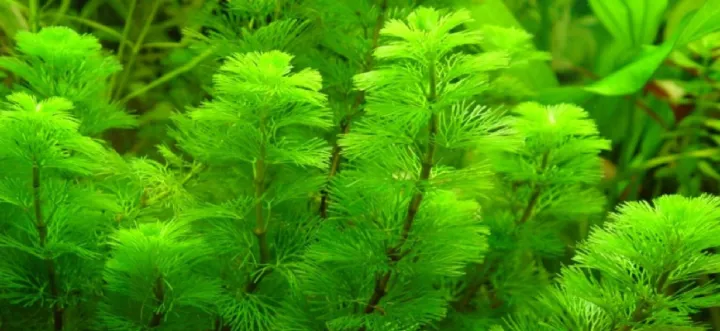
Carolina fanwort belongs to the Cabombaceae family and is a prominent aquatic plant native to North and South America. It is characterized by finely dissected, fan-shaped submerged leaves that grow on elongated stems.
To thrive, the plant requires high-intensity lighting conditions. In its natural habitat, it inhabits slow-moving or stagnant waters, but in cultivation, it needs clear water to allow maximum light penetration to the lower leaves.
The ideal temperature for development ranges from 18 to 26 degrees Celsius. Stability is key, as fluctuating thermal conditions can lead to stunted growth or even the rapid decay of stems in sensitive varieties.
Soil requirements involve a substrate rich in minerals and slightly acidic to neutral pH levels. The root system is relatively fragile and requires fine, well-aerated soil to absorb essential nutrients effectively.
In aquaculture, this species is widely used for aquascaping and as a biological filter. It absorbs large amounts of nitrogenous waste from the water column, helping to maintain chemical balance in the aquatic environment.
Main diseases and pests
The most common threat to this plant is the competition from filamentous algae, which can easily overgrow the delicate foliage. Controlling nutrient inputs is essential to prevent these unwanted algae outbreaks.
Water hardness fluctuations significantly affect the plant's health. High calcium content leads to mineral deposits on the leaf surface, which blocks light absorption and disrupts the plant's natural photosynthesis.
Bacterial decay is a frequent issue if the stems are physically damaged or if the water quality deteriorates due to high organic debris levels. Proper filtration and regular water maintenance are crucial.
Lack of sufficient carbon dioxide often leads to a visible decline in vigor. When the plant experiences carbon deficiency, it becomes more susceptible to systemic rot and thinning of the stem structures.
Invertebrate pests, such as certain species of snails, can cause significant damage by feeding on the soft leaf segments. Monitoring the health of the leaves is necessary to catch any infestations at an early stage.