
Bursera fagaroides
Bursera fagaroides (Kunth) Engl.
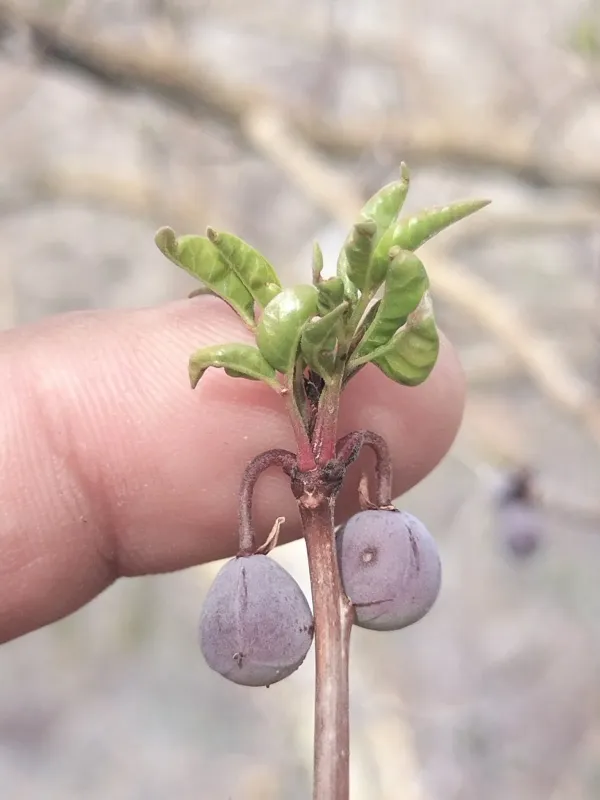
Description
Growing requirements
Bursera fagaroides is a distinctive member of the Burseraceae family, native to the arid and semi-arid regions of Mexico, known for its thickened, water-storing trunk.
The plant requires very well-draining, gravelly or rocky soils that mimic its natural habitat; heavy clay soils should be strictly avoided to prevent root diseases.
It thrives in full sunlight, which is essential for maintaining its structural integrity and the development of the characteristic papery bark that sheds naturally.
Water management is critical: provide water only during the active growing season, and allow the substrate to dry out completely between irrigations to avoid rot.
Propagation is primarily achieved via seeds, which require specific temperature conditions for germination, or through stem cuttings that are allowed to callous before planting.
Yield
The primary economic output of this culture is the aromatic resin known as copal, traditionally collected from the bark and used in incense, cosmetics, and medicine.
The yield of secondary metabolites, such as essential oils and resins, is significantly enhanced by high solar radiation levels and moderate environmental stress.
Industrial harvesting involves precise, seasonal tapping of the trunk, which must be performed with caution to ensure the long-term sustainability of the individual plant.
While primarily cultivated for its resin, the wood is also studied for its durability and unique chemical composition, making it a subject of interest in forestry research.
Planting density in modern agricultural setups is optimized to balance the available light per tree, ensuring consistent development of the stem structure over time.
Main diseases and pests
The most significant threat to Bursera fagaroides is fungal infection caused by high atmospheric humidity and poor air ventilation, which promotes decay.
Root rot, initiated by overwatering, remains the leading cause of loss in cultivation, often manifesting as softening of the base of the trunk.
Pests such as mealybugs and scale insects pose a threat by infesting the stem and young branches, causing stunted growth and providing entry points for pathogens.
Management practices should focus on maintaining a dry, airy environment and strictly avoiding the splashing of water on the trunk during maintenance activities.
Effective control involves manual removal of pests followed by the application of systemic insecticides where permitted, ensuring they do not disturb the plant's delicate bark tissue.