
Burretiokentia vieillardii
Burretiokentia vieillardii
Description
Growing requirements
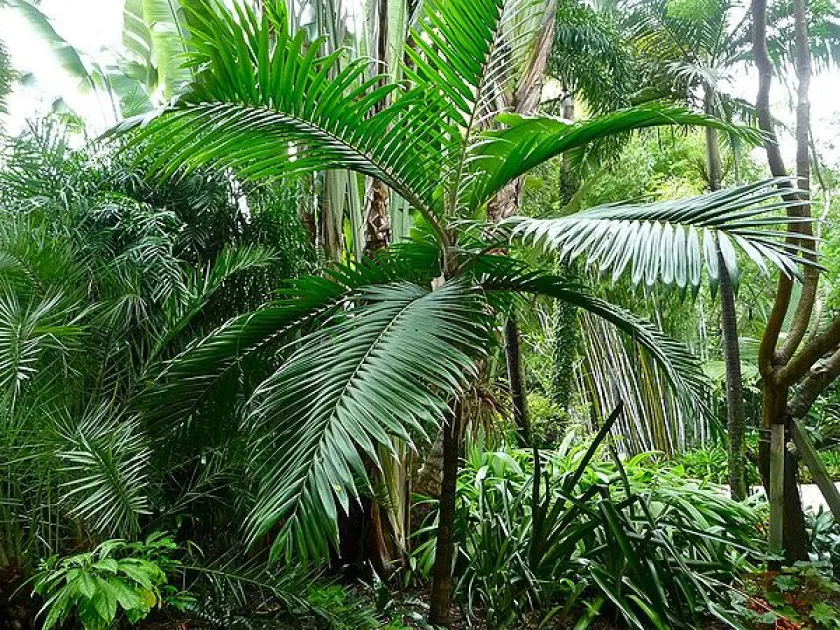
Burretiokentia vieillardii is a slender, solitary palm species belonging to the Arecaceae family. It is endemic to New Caledonia, where it inhabits humid, forested mountain slopes at various elevations.
Cultivation of this species requires strict adherence to tropical conditions. It thrives in environments with high humidity and consistent warm temperatures. The plant is not frost-tolerant and must be grown in climate-controlled environments or conservatories in non-tropical regions.
Light requirements involve dappled shade, especially for young specimens. Intense direct sunlight can damage the foliage. A balanced, well-draining soil mix enriched with organic matter, such as leaf mold and pumice, is crucial for healthy root development.
The plant demands regular watering to keep the soil consistently moist but never waterlogged. During the active growing season, liquid fertilization with a palm-specific nutrient solution is recommended to support leaf development.
Proper aeration is essential for this species. Stagnant air often leads to the development of fungal pathogens and attracts pests. Placing the plant in a well-ventilated area mimics its natural mountain habitat.
Main diseases and pests
Spider mites represent a major challenge for this palm when kept in indoor environments with low humidity. Regular misting and monitoring are necessary to prevent infestations.
Root rot, often caused by overwatering or poor drainage, is the primary threat to the plant's health. Ensuring the soil structure remains airy is the best prevention against these pathological conditions.