
Burretiokentia hapala
Burretiokentia hapala
Description
Growing requirements
Burretiokentia hapala is a rare and distinct palm species belonging to the Arecaceae family. It is endemic to New Caledonia, where it thrives in the understory of moist tropical forests, often found at higher elevations with consistent moisture levels.
In cultivation, this palm requires a stable tropical environment. It thrives in high-humidity conditions and performs best when protected from harsh, direct sunlight, which can easily scorch its delicate, lush green foliage.
The ideal soil for this species is a well-draining, nutrient-rich potting mix with a high percentage of organic matter. Proper drainage is crucial, as the root system of Burretiokentia hapala is highly susceptible to rot if allowed to sit in waterlogged conditions.
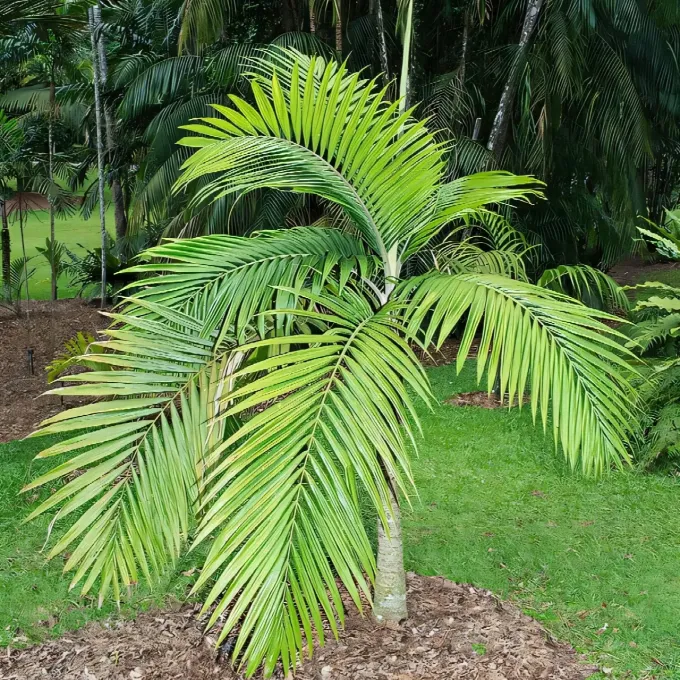
Botanically, this palm is prized for its elegant structure, featuring a slender trunk and graceful, arching pinnate leaves. It is a slow-growing plant, which necessitates patience and specific care to maintain its aesthetic appeal in botanical gardens or specialized collections.
Agronomic management involves maintaining consistent moisture levels using soft water and providing balanced, slow-release fertilizers during the growing season. During cooler months, it is essential to reduce watering frequency to mirror the plant's natural growth cycle.
Main diseases and pests
Root rot caused by fungal pathogens is the most significant health threat to Burretiokentia hapala. Maintaining soil aeration and avoiding over-irrigation are the primary defensive strategies against this disease.
Pest management should focus on monitoring for common tropical pests such as mealybugs and scale insects. These insects often hide on the undersides of leaves and in the crevices of the stem, necessitating regular inspections and appropriate insecticide treatments when infestations occur.