
Buglossoides purpurocaerulea
Buglossoides purpurocaerulea
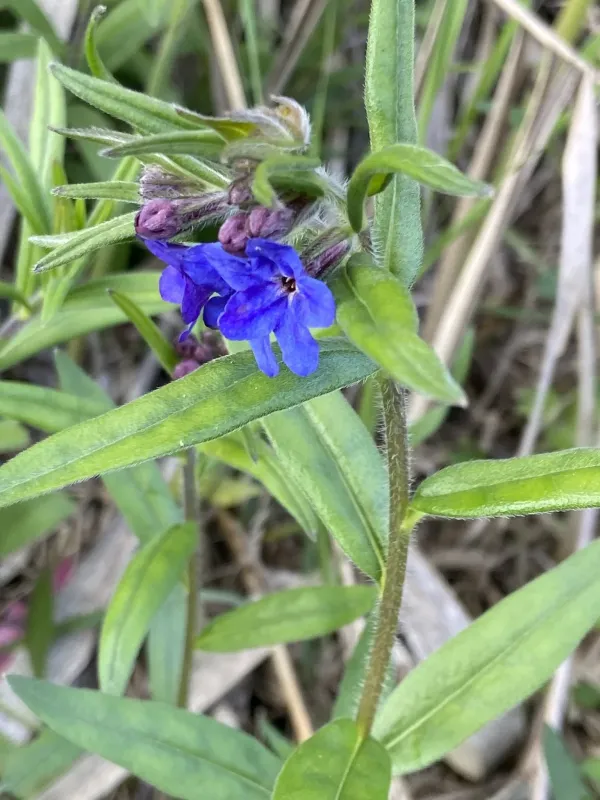
Description
Sowing dates
Buglossoides purpurocaerulea is typically propagated via division of its extensive rhizomes or by stem cuttings. The best time for planting is early spring or autumn, allowing the plants to establish roots during cooler, moist weather conditions.
When starting from seeds, autumn sowing is recommended to allow for natural cold stratification during the winter. Seeds should be sown shallowly in well-prepared soil to ensure consistent germination in the spring.
When planting divisions, maintain a spacing of 30 to 40 centimeters to accommodate the lateral spread of the rhizomes. Ensure the soil is firmed around the roots to eliminate air pockets and facilitate immediate hydration.
Early establishment requires regular irrigation until the plants demonstrate vigorous growth. Once established, the rhizomatous nature of the plant allows it to form dense, ground-covering colonies.
For large-scale landscaping, provide clear borders to manage the plant's spread, as it can naturally colonize adjacent areas over several growing seasons if left unchecked.
Growing requirements
This species belongs to the Boraginaceae family and is native to woodland margins and rocky slopes throughout Southern and Central Europe. It thrives in partial shade, making it ideal for shaded garden spots.
The plant prefers limestone-based or neutral soils that are well-drained. Heavy, waterlogged soils should be amended with organic matter and grit to prevent root rot, which is the primary limitation for this species.
It is remarkably hardy, surviving winter temperatures common in temperate zones without requiring special protection. It displays excellent resilience in varied climates, provided its soil moisture needs are met.
Minimal fertilization is required. A light application of compost in the spring is sufficient to maintain soil health and promote the characteristic deep blue-purple blooms that emerge in spring and early summer.
Environmental requirements prioritize moderate moisture and good air circulation. It should not be planted in stagnant, boggy areas, as it prefers the drier conditions of forest floors.
Main diseases and pests
Buglossoides purpurocaerulea is largely resistant to significant disease outbreaks. Its robust nature makes it a low-maintenance choice for gardeners and professional landscapers alike.
Powdery mildew may occur if the plants are placed in areas with poor airflow and high humidity. Thinning out overcrowded sections and ensuring adequate spacing are effective preventive measures.
Pests are rarely a concern for this plant. In exceptional cases, aphids may congregate on soft new growth, but they are easily managed with gentle insecticidal soaps or biological controls.
Gastropods, such as slugs and snails, can cause cosmetic damage to leaves in early spring. Installing coarse mulches or physical barriers can effectively mitigate this minor issue.
Overall, the plant is highly durable and suffers from few biological threats, provided it is grown in suitable environmental conditions that prevent stress-induced susceptibility.