
Buglossoides incrassata
Buglossoides incrassata
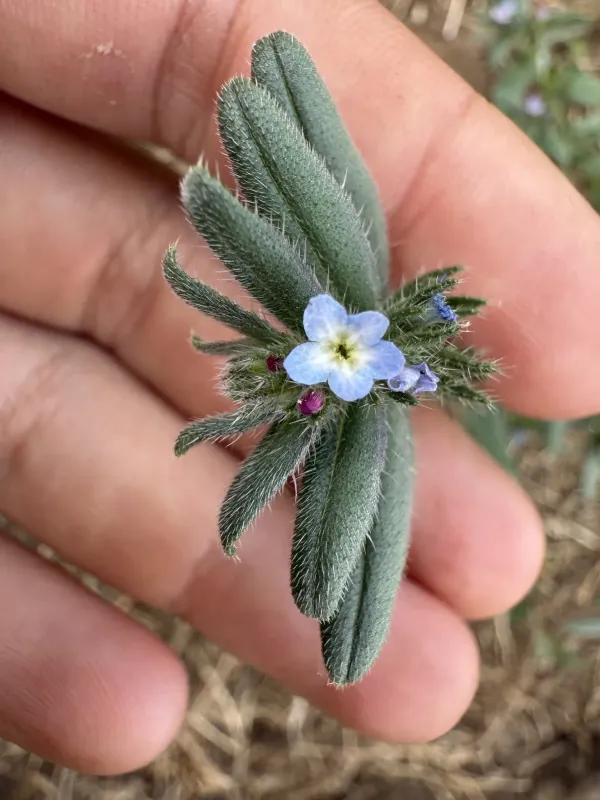
Description
Growing requirements
Buglossoides incrassata is a herbaceous plant belonging to the Boraginaceae family. It is native to the Mediterranean region, typically found in dry, stony habitats where it has adapted to harsh environmental conditions.
Botanically, the plant is recognized by its coarse, hispid pubescence covering both stems and leaves, which helps in reducing transpiration. The inflorescences are typical scorpioid cymes, a signature trait of the borage family.
The crop thrives in well-drained, calcareous soils. It possesses excellent drought resistance, making it suitable for regions characterized by limited water availability and high solar exposure throughout the summer season.
Temperature requirements are generally moderate to high, as the plant initiates active growth during the warming periods of late spring. It is essential to ensure that the site has optimal drainage to prevent root hypoxia.
In terms of usage, the plant is primarily studied for its potential in niche agricultural systems, including its role as a honey plant and its prospective utility in stabilizing soils in arid agricultural environments.
Main diseases and pests
The primary threats to Buglossoides incrassata include fungal infections such as powdery mildew, which can develop rapidly under conditions of high relative humidity and poor air circulation.
Pests typically include aphids and specific coleopterans that can defoliate plants during early developmental stages. Monitoring the crop for these insects is vital to maintain biomass yield.
Effective management strategies involve ensuring proper row spacing to optimize ventilation and light penetration, which effectively discourages the establishment of fungal spores.
Chemical control measures should only be used as a last resort, prioritizing integrated pest management (IPM) practices to reduce environmental impact and preserve beneficial insects.
Routine scouting and the removal of infected plant parts are recommended techniques to prevent the spread of localized disease outbreaks across the field.