
Bryum capillare
Bryum capillare
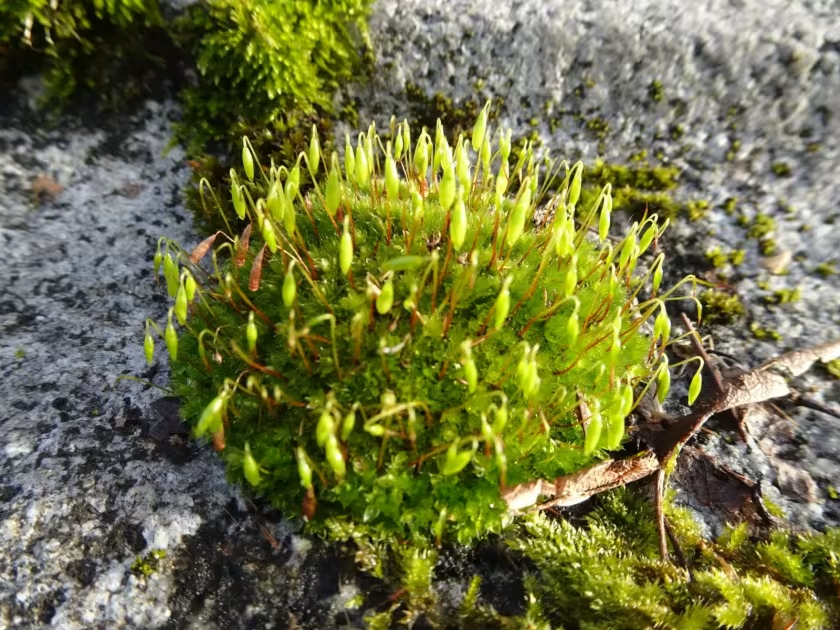
Description
Growing requirements
Bryum capillare is a prominent member of the Bryaceae family, a common moss species recognized by its distinct morphology and wide ecological adaptability across the Northern Hemisphere.
The plant grows in dense tufts ranging from yellowish-green to brownish hues. Its leaves are notable for a strong midrib that typically extends beyond the leaf tip, forming a hair-like point which is the primary botanical identifier for the species.
This species thrives in a variety of habitats, including forest floors, meadows, and anthropogenic sites like parks and gardens. It prefers environments with moderate moisture levels and stable soil conditions.
Regarding soil requirements, it favors slightly acidic to neutral substrates. The plant is highly resilient to temperature fluctuations, allowing it to colonize areas with varying microclimates effectively.
Economically and ecologically, it serves as an essential component of ground cover, assisting in soil erosion control and moisture retention in natural landscapes and garden ecosystems.
Main diseases and pests
The primary threats to Bryum capillare populations include chemical pollution, specifically the application of broad-spectrum herbicides, which severely inhibit moss growth and survival.
Fungal pathogens represent a significant risk, especially in conditions where poor soil aeration and waterlogging promote the development of rot in the lower foliage.
Soil-dwelling invertebrates and nematodes can cause direct physical damage to the rhizoids, impairing the plant's ability to absorb essential nutrients and water from the substrate.
Excessive soil compaction due to human activity or machinery creates unfavorable physical conditions for the moss colony, often leading to decline and loss of ground cover.
Prolonged drought periods combined with intense sunlight can lead to desiccation and senescence of the colonies, reducing their overall vitality and competitive capacity in the ecosystem.