
Silver-thread moss
Bryum argenteum
Description
Growing requirements
Silver-thread moss (Bryum argenteum) is a cosmopolitan member of the Bryaceae family, recognized for its exceptional resilience. It is frequently encountered in urban landscapes, agricultural edges, and disturbed soils, proving its status as a highly successful pioneer species.
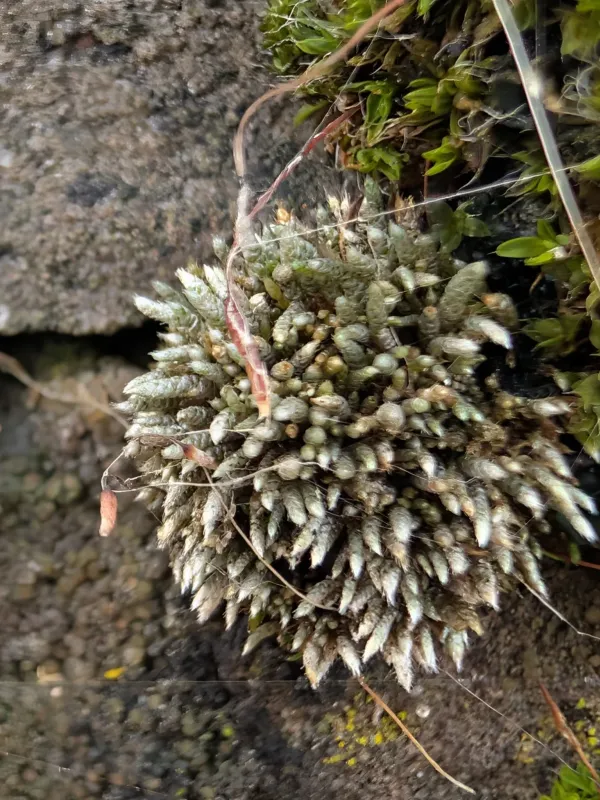
The plant is distinguished by its small, compact, silvery-green cushions. The silvery tips of the leaves, which are devoid of chlorophyll, serve as a protective mechanism against intense light, allowing the moss to flourish in environments that would scorch other bryophytes.
In terms of habitat requirements, it is remarkably flexible. It thrives in various climates, ranging from the poles to the tropics, and shows a strong affinity for neutral to alkaline substrates. It can colonize compacted, nutrient-poor, and high-traffic areas where other vegetation struggles to compete.
The biological success of the species is linked to its ability to tolerate significant dehydration. During dry spells, the moss becomes dormant and can revive almost immediately upon exposure to moisture, making it a persistent presence in managed areas.
While not a traditional agricultural crop, its occurrence is often viewed as a negative indicator in agronomy. It signals suboptimal soil structure, poor water drainage, or low vigor in the primary canopy, necessitating changes in land management practices to restore balance.
Main diseases and pests
Effective management begins with improving soil physical properties. Mechanical aeration, such as core aeration or deep spiking, reduces compaction and ensures better oxygen circulation, which is detrimental to the establishment of silver-thread moss.
Chemical control remains a common practice in turf management. Iron-based treatments, such as ferrous sulfate, are highly toxic to Bryum argenteum while remaining safe for most grasses. Application should be performed during periods of active growth for the best results.
Modifying soil pH is another strategic approach. Moss species generally prefer acidic environments; therefore, applying lime or wood ash to shift the soil reaction towards an alkaline range effectively creates a hostile environment for the moss colony.
Cultural practices that promote a dense and vigorous sward cover are vital. When the primary crop is healthy and covers the ground surface completely, the lack of light penetration prevents the germination and development of moss spores.
Monitoring for excessive surface moisture is essential. Reducing shade, improving drainage patterns, and adopting more efficient irrigation techniques prevent the accumulation of surface water, which is the primary driver of moss proliferation in any agro-ecosystem.