
Bryopsis plumosa
Bryopsis plumosa
Description
Growing requirements
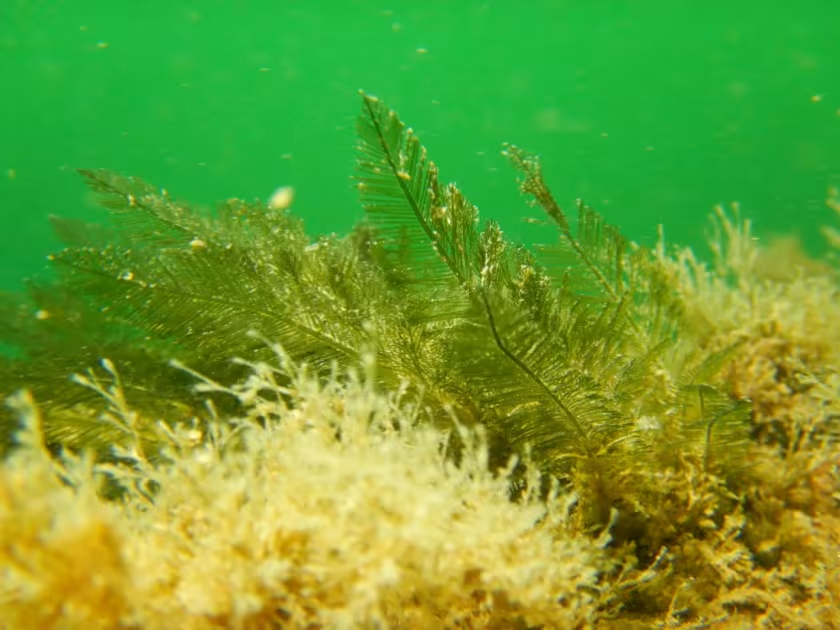
Bryopsis plumosa is a species of green algae in the family Bryopsidaceae. It is characterized by a siphonous, feather-like thallus structure that is highly distinct in marine environments across the globe.
This species is native to a wide range of temperate and subtropical coastal regions. It typically grows attached to rocks, shells, or other firm substrates in the intertidal or shallow subtidal zones where currents provide constant nutrient flow.
Environmental requirements for this species include optimal salinity levels, typically ranging between 20 to 35 parts per thousand. It requires moderate to high light exposure to facilitate efficient photosynthetic activity within its single-cell multinucleated structure.
Regarding agricultural or aquacultural practice, the species thrives in nutrient-rich water. It is known for its ability to rapidly absorb minerals, which makes it an efficient biological agent for nutrient cycling in controlled aquatic systems.
The botanical uniqueness of Bryopsis plumosa lies in its coenocytic organization, meaning the entire plant is effectively one giant cell with many nuclei, allowing for rapid structural expansion and regeneration.
Main diseases and pests
In aquaculture, the primary challenge is the invasive nature of the species. Its rapid growth can clog intake pipes and filtration systems if not properly managed within a controlled farming environment.
Grazing pressure from marine invertebrates, such as sea slugs (sacoglossans) and certain crustacean species, represents a significant threat to the biomass and health of the algal crop.
Pathogenic outbreaks, often bacterial in nature, can occur when water quality degrades, leading to rapid disintegration of the delicate feathery branches of the thallus.
Environmental stress, specifically fluctuations in water temperature or exposure to toxic chemicals, can lead to tissue bleaching and senescence, significantly reducing yield quality.
Effective management requires strict adherence to water quality protocols, regular removal of biomass surplus, and physical barriers to prevent the spread of the algae to sensitive equipment zones.