
Bryopsis muscosa
Bryopsis muscosa
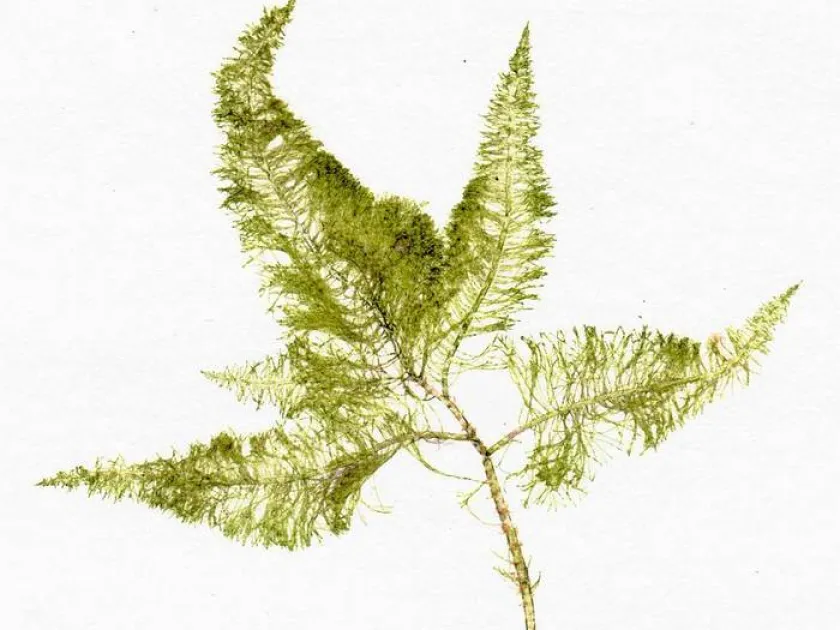
Description
Growing requirements
Bryopsis muscosa is a species of siphonous green algae belonging to the family Bryopsidaceae. Its thallus structure is fascinating because it consists of a single, giant, coenocytic cell that branches out, creating a complex filamentous mat often resembling moss.
The natural distribution of this organism includes coastal regions of temperate and tropical seas. In aquaculture settings, it thrives on stable rocky or synthetic substrates, provided there is consistent water movement to facilitate nutrient uptake.
Successful cultivation requires high-intensity lighting with a spectral composition optimized for chlorophyll-a and chlorophyll-b absorption. Proper light management is the primary factor influencing the density and vigor of the algal mat.
The salinity requirements for Bryopsis muscosa are strictly marine, typically ranging from 30 to 35 ppt. Fluctuations in mineral composition or salinity can compromise the integrity of the siphonous wall, leading to structural failure.
Nutrient concentration must be carefully balanced. While the species is a fast grower, excessive nitrate or phosphate availability can lead to an explosive expansion, which may collapse due to self-shading and nutrient depletion in localized areas.
Main diseases and pests
The primary concern during cultivation is the invasive potential of the species. Its spores can easily spread throughout a closed aquatic system, colonizing filtration components and other sensitive equipment, which is difficult to reverse.
Infection by pathogenic fungi or bacteria is common in environments with poor circulation. Once a section of the thallus becomes compromised, pathogens can rapidly spread through the continuous cytoplasm of the giant cell, killing the entire filament.
Competition from other fast-growing algae and sessile invertebrates can significantly reduce the yield. Regular maintenance and pruning are necessary to ensure the dominance of the desired culture in the cultivation tanks.
Grazing by specialized marine gastropods or certain species of fish is a major threat. These predators can consume large patches of algae, and their introduction must be strictly prevented through physical barriers or quarantine protocols.
Temperature fluctuations outside the optimal range of 20–26 degrees Celsius will trigger reproductive cycles that often lead to the rapid senescence and death of the vegetative thallus. Precise thermoregulation is essential for consistent biomass production.