
Brunia stokoei
Brunia stokoei E. Phillips
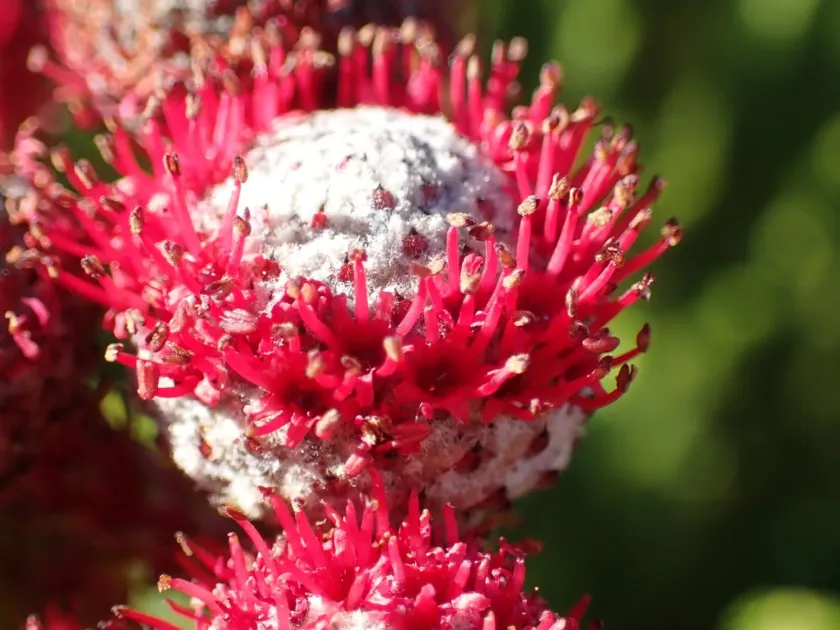
Description
Sowing dates
Propagation of Brunia stokoei in commercial settings is typically achieved through seeds or cuttings within a controlled environment. Seeds possess low germination rates, requiring stratification techniques to break dormancy.
The optimal time for sowing in greenhouse complexes is late winter or early spring. This schedule allows young plants to establish sufficient vigor before the peak summer growth season.
The growing medium must be light, sandy, and slightly acidic, mimicking the natural soil conditions of the South African fynbos biome where this species originates.
Cuttings are taken in late summer, utilizing semi-hardwood shoots. The application of rooting hormones is mandatory to achieve a satisfactory percentage of successful rooting.
After the first true leaves emerge, seedlings are pricked out into individual pots. Excellent drainage is vital during this stage, as water stagnation is lethal to the sensitive root system.
Growing requirements
Brunia stokoei belongs to the Bruniaceae family and is an endemic species to the Cape Floristic Region of South Africa. The plant thrives in sunny locations with constant air circulation.
This crop is highly sensitive to soil composition: it requires nutrient-poor, loose, and well-drained soil. Heavy clay soils will quickly lead to root decay and overall plant decline.
A moderate temperature range is necessary for healthy development. The plant does not tolerate severe frosts or extreme heat, requiring greenhouse protection in most non-native climates.
Irrigation must be based on the principle of moderation; the substrate should be allowed to dry slightly between watering events to prevent fungal pathogen proliferation.
The plant is adapted to low nitrogen environments, so fertilization must be performed with extreme caution using fertilizers specifically formulated for fynbos-type plants.
Main diseases and pests
Root rot, primarily caused by improper moisture management, is the most significant threat to Brunia stokoei. Excess water often leads to infections by Phytophthora species.
Powdery mildew may affect the foliage if greenhouse ventilation is inadequate or if relative humidity remains too high during nighttime hours.
Among pests, spider mites and mealybugs pose the greatest danger. They proliferate quickly in protected environments, sapping vitality from tender new growth.
Aphids can also cause significant damage during the active spring growth phase, leading to stunted shoots and deformed, unmarketable flower heads.
Integrated pest management strategies, including regular monitoring and the use of biological control agents, are preferred due to the sensitivity of Bruniaceae to harsh chemical pesticides.
Harvesting
The economic value of Brunia stokoei lies in its production as a high-quality cut flower. Its dense, globose flower heads are highly sought after for complex floral arrangements.
Harvesting is performed when the flower heads have achieved their maximum volume and texture, but before the loss of their characteristic color intensity.
Cut stems are known for their exceptional vase life, making them a preferred material for high-end floral designs and wedding bouquets that require long-lasting components.
Post-harvest care involves placing stems immediately into clean water treated with bactericides, which prevents the clogging of vascular tissues by microbial buildup.
When stored at controlled low temperatures, cut Brunia can maintain marketability for up to two weeks, providing a distinct economic advantage for commercial growers.