
Browningia candelaris
Browningia candelaris
Description
Growing requirements
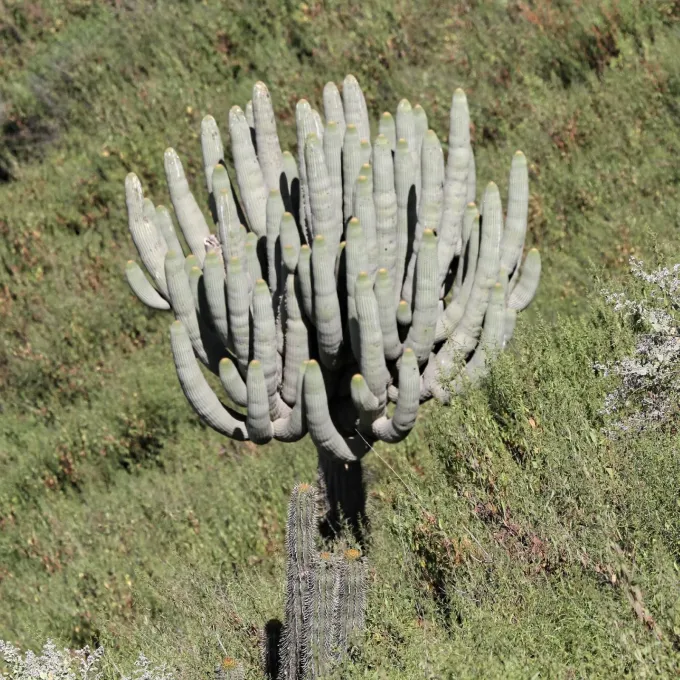
Browningia candelaris is a remarkable member of the Cactaceae family, known for its unique appearance that resembles a candelabra. It is native to the arid, high-altitude regions of the Andes, specifically found in Peru and Chile at elevations reaching up to 3000 meters.
Botanically, this species starts as a solitary columnar cactus with pronounced ribs and dense spines. As it matures, it branches significantly, creating the iconic candelabra-like silhouette. The surface is often protected by a thick cuticle to prevent water loss.
In cultivation, the primary requirement is maximum solar exposure. This plant thrives under intense, direct light, which is essential for maintaining the integrity of its growth. Without sufficient light, the plant will become etiolated and lose its structural stability.
The growing medium must be highly mineral-based, mimicking the rocky mountain slopes. A mixture of pumice, coarse sand, and a small amount of grit is ideal. Proper drainage is non-negotiable, as the roots are highly susceptible to moisture-related stress.
Climatic requirements involve a significant diurnal temperature variation. During the growing season, it prefers warm days and cooler nights. Wintering requires a strict dormancy period with temperatures around 10-12°C and complete cessation of watering to prevent tissue damage.
Main diseases and pests
The most significant threat to Browningia candelaris is overwatering, which quickly leads to root rot and fatal stem decay. Because it is adapted to extreme aridity, even slight excess moisture can be destructive to its root system.
Spider mites are common pests that thrive in dry environments. They often target the growing tips of the cactus, causing discoloration and stunting growth. Regular inspection and adequate air circulation are the best preventative measures.
Mealybugs are another common nuisance that can hide within the crevices of the spines. Their presence can weaken the plant's immune system, making it more prone to fungal infections that can manifest as black spots on the stem.
Environmental stress, such as sudden shifts in light intensity, can cause sunburn on the epidermis. While these scars are often permanent, they provide entry points for pathogens, necessitating careful acclimation whenever the plant is moved.
To ensure long-term health, growers should avoid organic-heavy fertilizers. Using specialized low-nitrogen, high-potassium cacti fertilizers during the active growing season will promote strong, healthy growth and natural resistance to common threats.