
Brassaiopsis griffithii
Brassaiopsis griffithii
Description
Growing requirements
Brassaiopsis griffithii is a distinct plant species belonging to the Araliaceae family. It is native to the forested regions of the Himalayas and parts of Southeast Asia, where it thrives in humid, shaded environments.
This crop requires specific climatic conditions, including stable warm temperatures and high atmospheric humidity. In terms of soil, it demands a well-draining medium that is rich in organic matter to mimic the forest floor conditions.
Proper agricultural management involves consistent shading, as direct sunlight can easily damage the delicate foliage. Furthermore, the root system requires soil that avoids waterlogging while maintaining consistent moisture levels.
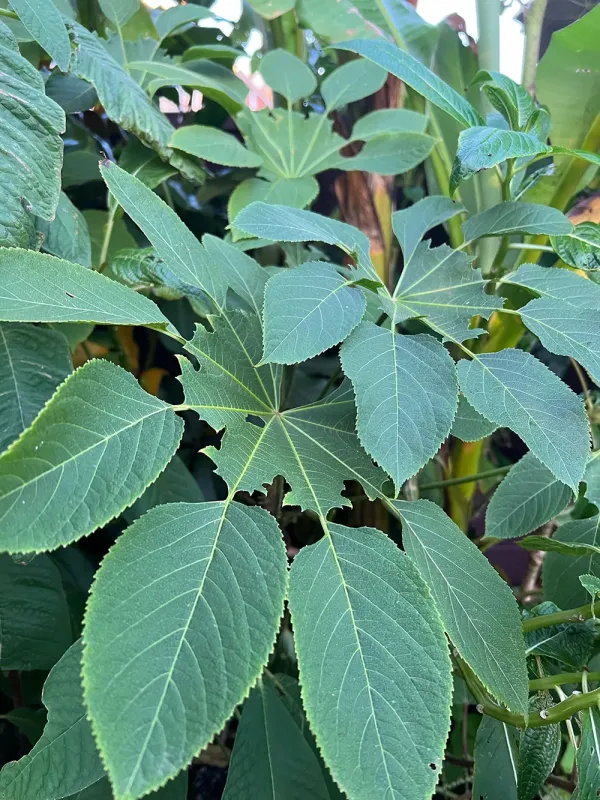
The botanical structure of Brassaiopsis griffithii is characterized by large, palmately divided leaves and a woody stem. These features allow the plant to capture limited light efficiently in its natural forest habitat.
Growers should monitor soil pH levels, keeping them slightly acidic to neutral to ensure optimal nutrient uptake. Regular assessment of the crop's health during the initial growth stages is vital for successful establishment.
Harvesting
In terms of practical use, Brassaiopsis griffithii is utilized in ornamental landscaping and specific traditional medicinal practices. Its unique chemical profile makes it a subject of interest for biochemical research.
Harvesting strategies focus on the gentle collection of plant parts to ensure long-term sustainability. Mechanical harvesting is generally not applicable; therefore, manual labor remains the standard for collecting raw material.
Post-harvest processing involves immediate drying to preserve active compounds. The drying environment must be strictly controlled for temperature and airflow to prevent degradation of the plant's structural and chemical integrity.
Storage requirements include cool, dark, and dry conditions to protect the processed material from oxidation. Proper sealing of containers is essential for preserving quality over long periods.
Future agricultural prospects for this species rely on increasing awareness of its biological properties. Sustainable harvesting practices are mandatory to prevent over-exploitation in the wild and to promote ethical cultivation.