
Guadalupe palm
Brahea edulis
Description
Sowing dates
Propagation of the Guadalupe palm is primarily achieved through seeds. Fresh seeds show the highest germination rates, though they benefit significantly from soaking in warm water for 48 hours to soften the hard outer coat.
Sowing should be performed in a well-draining, sandy-peat substrate. Consistent moisture and a warm environment, ideally between 25 and 28 degrees Celsius, are crucial for successful emergence.
Germination is notoriously slow and sporadic, often taking several months. Patience is required, as the root system develops significantly before any green shoots appear above the soil surface.
Once seedlings have developed two or three leaves, they should be carefully transplanted into deeper containers. The taproot is very delicate and should not be subjected to unnecessary stress during this stage.
Establishing the young palms in their permanent location or larger pots requires a gradual acclimation process to ensure the root system is well-settled before facing environmental fluctuations.
Growing requirements
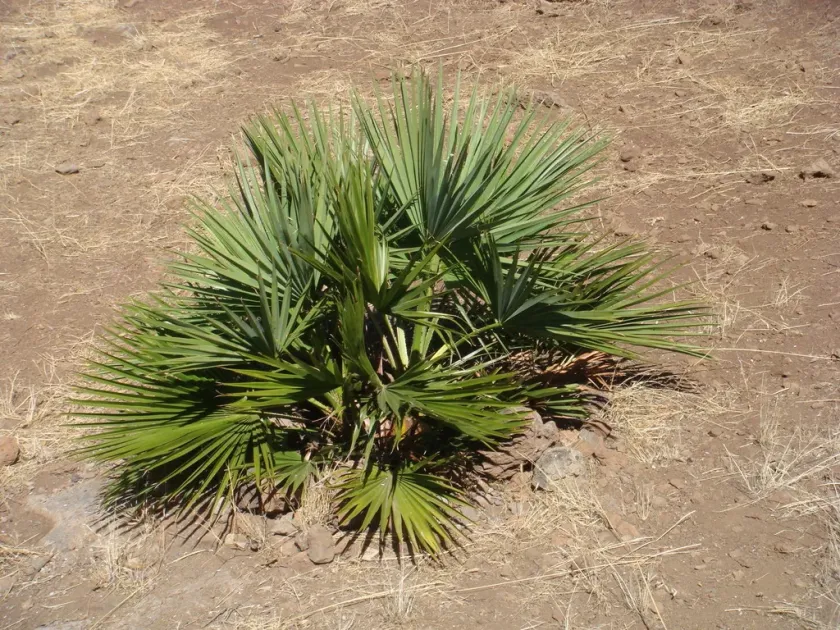
The Guadalupe palm (Brahea edulis) belongs to the family Arecaceae and is endemic to Guadalupe Island, Mexico. It is a slow-growing, fan-leaf palm that thrives in temperate to Mediterranean climates.
The plant demands full sun exposure to maintain its vigorous growth and distinct blue-green foliage. In low-light conditions, the palm becomes etiolated and loses its ornamental value.
Soil requirements are relatively undemanding, provided that drainage is excellent. The species is well-adapted to rocky, porous soils that prevent the accumulation of stagnant water.
It displays moderate cold hardiness, capable of withstanding temperatures down to approximately -6 degrees Celsius once established. This makes it a popular choice for protected coastal gardening.
When grown in cooler regions, it serves as a stunning architectural plant for containers. During winter months, it should be kept in a bright, cool, and frost-free environment.
Yield
The fruit of the Guadalupe palm is fleshy and sweet, measuring roughly 2–3 cm in diameter. It has historically been consumed as a food source, which gives the species its botanical epithet "edulis".
Bearing fruit is a long-term investment, as the palm typically requires over a decade of growth before it reaches reproductive maturity. Production is seasonal and often localized.
The fruits develop in large, pendulous clusters that hang beneath the fan-shaped fronds. Proper nutrient balance and solar exposure during the growth season are key to maximizing crop output.
While not a primary commercial crop, the fruit is highly valued in niche markets for its exotic appeal and unique flavor profile, often likened to dates or plums.
Apart from the fruit, the palm itself is a highly sought-after specimen for landscaping, contributing to its economic value in the nursery and interior design industries.
Main diseases and pests
Root rot, caused by overwatering and heavy soil, is the most common fatal condition for Brahea edulis. It necessitates a strict irrigation schedule that allows the soil to dry between waterings.
Pests such as spider mites and scale insects are frequently encountered, particularly in indoor settings with low humidity. They congregate on the undersides of the leaves.
Leaf spot diseases can occur if foliage remains wet for extended periods in low-airflow conditions. Ensuring good ventilation is essential for maintaining the aesthetic quality of the leaves.
Management of these threats involves routine inspections and targeted applications of systemic insecticides or antifungal treatments when early symptoms are identified.
Preventive maintenance, including the removal of dead fronds and proper spacing between plants, significantly reduces the risk of pest outbreaks and pathogen spread.