
Blue Hesper Palm
Brahea armata
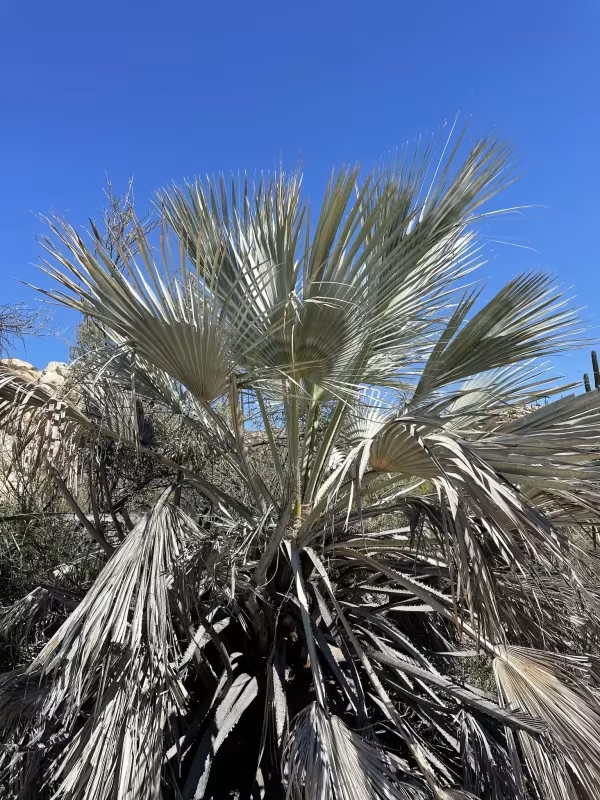
Description
Growing requirements
The Blue Hesper Palm (Brahea armata) is a member of the Arecaceae family. This distinct species originates from the rocky canyons of Baja California, Mexico.
It is widely recognized for its stunning, silver-blue fan-shaped leaves and its exceptional ability to withstand significant periods of drought and high temperatures.
Botanically, this palm features a sturdy, upright trunk and long inflorescences that can extend beyond the canopy, producing a dramatic display during the flowering season.
For successful cultivation, full sun exposure is non-negotiable. This plant requires maximum light to maintain its characteristic blue glaucous leaf coating.
The soil must provide excellent drainage. Clay-heavy soils should be avoided or amended with gravel and coarse sand to prevent water stagnation around the root crown.
Main diseases and pests
The most significant threat to the Blue Hesper Palm is root rot, which typically occurs due to overwatering or planting in poorly drained soil types.
Pest issues usually involve spider mites, which can be problematic during hot and dry spells, leading to yellowing or speckling of the fronds.
Scale insects and mealybugs may also infest the base of the petioles, hiding within the fiber and making them difficult to detect without careful inspection.
Fungal leaf spots can appear if the plant is kept in humid, poorly ventilated conditions, which are contrary to the species' native desert environment.
Preventive maintenance involves regular leaf cleaning, ensuring adequate airflow around the canopy, and strictly adhering to dry-out periods between waterings.