
Brachyglottis bidwillii
Brachyglottis bidwillii (Hook. f.) B. Nord.
Description
Growing requirements
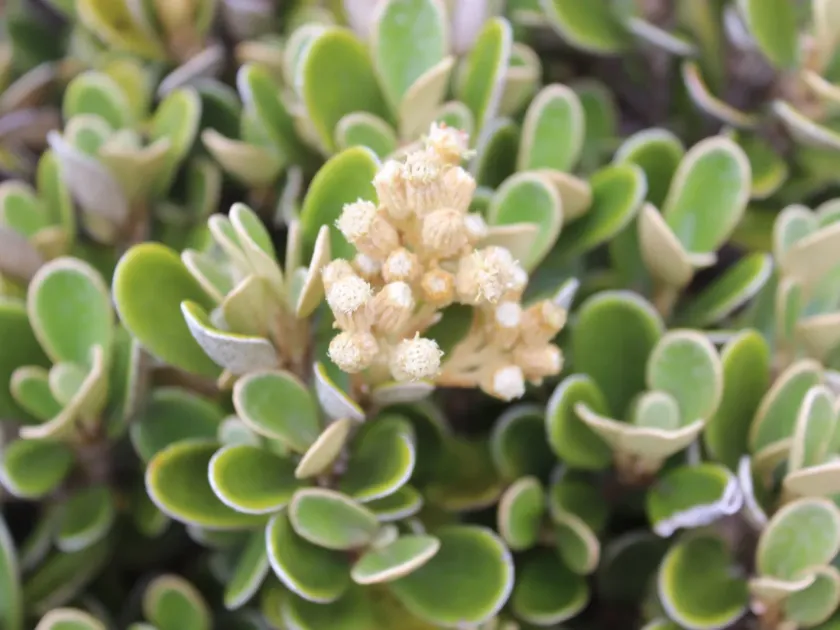
Brachyglottis bidwillii is an evergreen shrub belonging to the Asteraceae family. Native to the alpine and subalpine regions of New Zealand, this plant is well-adapted to rocky environments and harsh, windy mountain conditions.
The botanical structure of the shrub is characterized by thick, leathery leaves covered in a dense, silvery-white tomentum on the underside. This layer acts as a natural insulator and moisture retainer, essential for the plant's survival in its high-altitude native habitat.
Cultivation requires a substrate that mimics its natural stony habitat. A soil mix consisting primarily of coarse grit, sand, and a small amount of organic matter is ideal. Drainage must be exceptional, as waterlogging is almost always fatal to this species.
Climate preferences lean toward cool, temperate conditions. While the plant can tolerate light frost, it struggles in regions with hot, humid summers. Providing a site with bright morning light and afternoon shade is recommended for optimal plant health.
Maintenance involves minimal fertilization. Over-fertilization leads to soft, weak growth that is susceptible to pests and weather damage. A top-dressing of gravel around the base of the plant is recommended to keep the foliage dry and prevent stem rot.
Main diseases and pests
Root rot is the most significant threat to Brachyglottis bidwillii. It occurs primarily when the soil remains too moist or when the drainage system is insufficient, allowing pathogens to infect the root crown and cause sudden collapse.
Mealybugs are a common pest in glasshouse or indoor environments. They tend to hide in the axils of the leaves, making them difficult to detect until an infestation is well-established. Routine cleaning and the use of insecticidal soap can manage these outbreaks.
Fungal leaf spots can occur if the plant is kept in an area with stagnant air. High humidity combined with lack of airflow encourages fungal spore germination, leading to unsightly blemishes and potential defoliation.
Nutrient toxicity, especially from nitrogen-rich commercial fertilizers, can damage the plant's delicate root system. It is best to use slow-release fertilizers formulated specifically for alpines or succulent plants at half the recommended strength.
To ensure long-term health, monitor the plant for signs of stress during heatwaves. If the leaves begin to droop or lose their luster, move the plant to a cooler location and ensure that no water is trapped in the center of the shrub's canopy.