
Borreria repens
Borreria repens
Description
Growing requirements
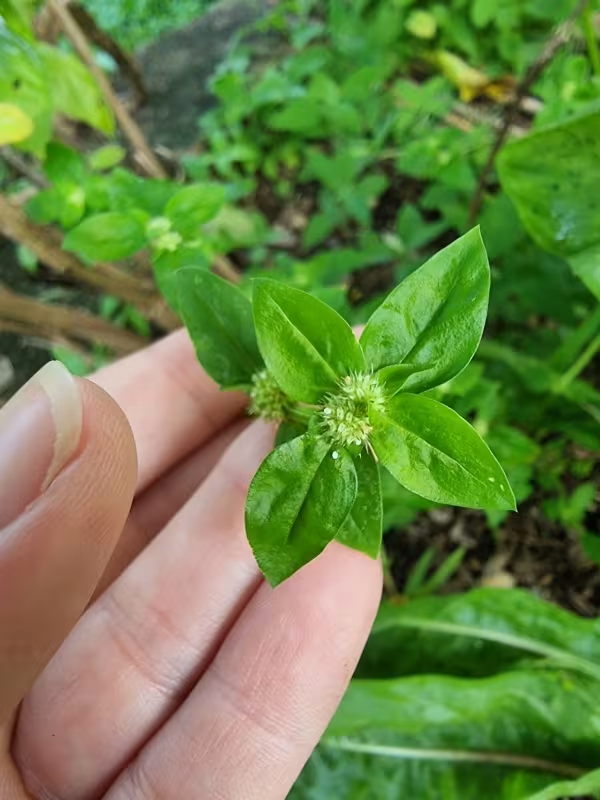
Borreria repens, scientifically classified within the Rubiaceae family, is a creeping herb known for its rapid vegetative spread. The plant architecture is characterized by prostrate stems that branch out and develop adventitious roots at the nodes, allowing it to colonize moist ground effectively.
The leaves of this species are typically opposite, exhibiting a lanceolate shape with prominent venation. Its flowers are small, often white or pale, and arranged in dense clusters at the leaf axils or stem terminals, which is a common diagnostic feature for the Spermacoceae tribe.
Regarding environmental requirements, the plant thrives in tropical climates characterized by high annual precipitation and consistent ambient temperatures. It favors humid soil conditions and can persist in various habitats, including shaded forest edges and cleared agricultural lands.
Soil management for this species is minimal due to its inherent resilience in fertile, moisture-retentive substrates. However, it requires an adequate nutrient supply, particularly nitrogen, to maintain its lush green cover and rapid reproductive cycle during the peak growing season.
From an agronomic perspective, while Borreria repens is occasionally studied for its medicinal properties and soil stabilization potential, it is primarily managed as a competitor in agricultural settings. Controlling its expansion requires systemic mechanical or chemical interventions when it encroaches on primary crop fields.