
Borreria bartlingiana
Borreria bartlingiana
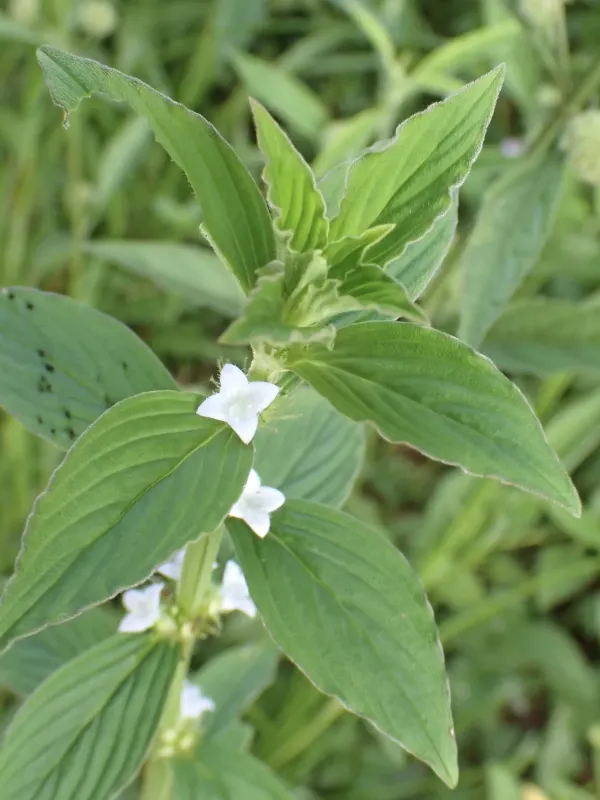
Description
Growing requirements
Borreria bartlingiana is a member of the Rubiaceae family, widely known for its distribution in the tropical regions of South America. As an herbaceous species, it often serves as a significant component of local plant communities, showcasing high adaptability to warm climate conditions.
The botanical profile includes characteristic opposite leaves and dense capitate inflorescences typical for the genus Borreria (often taxonomically linked with Spermacoce). Its structural morphology allows it to thrive in diverse environments, ranging from open savannas to disturbed secondary forests.
Regarding environmental requirements, the plant demands consistent temperatures and sufficient solar radiation to reach maturity. It performs best in regions where the climate allows for year-round growth without the risk of frost, which is lethal to the physiological processes of this species.
Soil management for this crop requires well-aerated media with efficient drainage properties. While the plant can tolerate varied nutrient levels, it responds positively to balanced organic inputs that maintain soil structure and prevent compaction, which is critical for healthy root development.
In agricultural practice, this species is noted for its potential roles in sustainable land management or specialized botanical extractions. Research into its cultivation focuses on optimizing yields in its native range and evaluating its ecosystem services within diversified agricultural systems.