
Blumeodendron subrotundifolium
Blumeodendron subrotundifolium
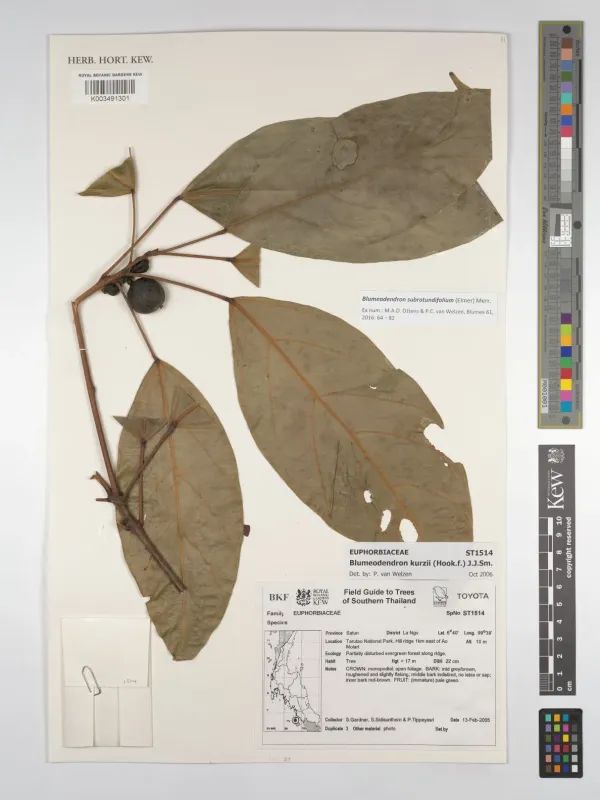
Description
Growing requirements
Blumeodendron subrotundifolium is a notable tree species belonging to the Euphorbiaceae family. It is predominantly found in the tropical rainforests of Southeast Asia, where it thrives as part of the diverse jungle canopy.
The climate requirements for this species include high humidity and consistent tropical temperatures throughout the year. It does not tolerate frost or prolonged drought periods, making its cultivation restricted to specific tropical zones.
The tree prefers deep, fertile, and well-draining soils that are typical of tropical regions. Adequate moisture levels in the soil are essential for the species' growth, though it requires good aeration to prevent root rot.
Botanically, Blumeodendron subrotundifolium is characterized by its sub-rounded leaves and robust woody structure. The tree exhibits typical physiological adaptations for high-competition environments, including rapid growth phases.
In terms of economic utility, the tree provides valuable timber that is utilized by local communities. Its wood quality makes it suitable for various domestic applications, including construction and the production of small-scale wooden tools.
Main diseases and pests
Fungal pathogens represent the most significant threat to this species, especially in areas with poor airflow and excessive moisture. These fungi can lead to bark decay and internal wood rot if left untreated.
Various borers and wood-feeding insects can cause extensive damage to the tree's health by creating galleries within the trunk. This weakens the tree's structural integrity over long periods.
Environmental stress, such as deforestation or excessive soil compaction, significantly increases the vulnerability of these trees to pests. Protecting the surrounding habitat is crucial for the survival of the species.
When grown in nurseries, seedlings are particularly susceptible to damping-off diseases. Proper sanitation and the use of sterile growing media are essential to reduce seedling mortality rates.
Effective management involves monitoring leaf health for signs of necrosis or insect grazing. Implementing integrated pest management strategies helps maintain a healthy population while minimizing the impact on the local ecosystem.