
Blumeodendron endocarpum
Blumeodendron endocarpum
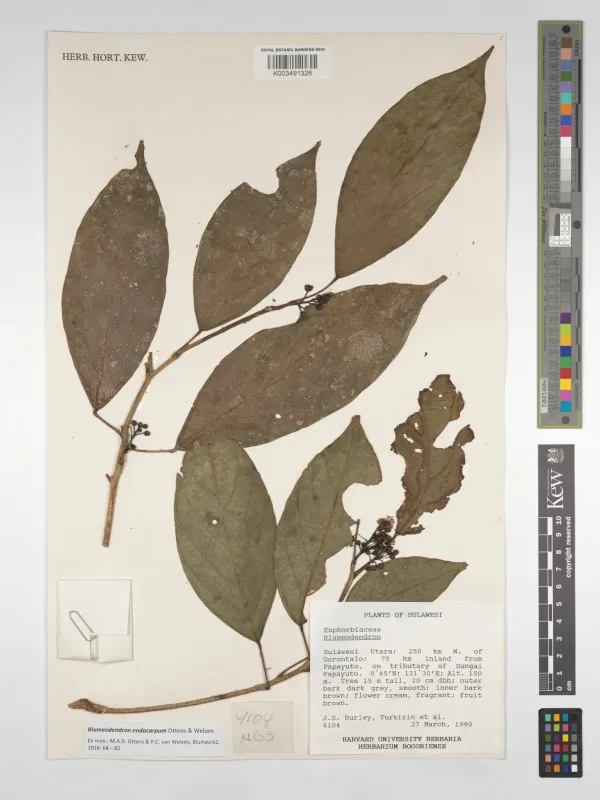
Description
Growing requirements
Blumeodendron endocarpum is a significant tree species within the Euphorbiaceae family. It is naturally adapted to the dense, humid environments of tropical rainforests in Southeast Asia, where it serves as a key component of the forest structure.
The species thrives under strict climatic conditions, requiring high annual rainfall and consistent tropical temperatures. It is not frost-tolerant and requires protection from extreme wind, which can damage the canopy of young trees during their establishment phase.
Soil quality is essential for the healthy growth of this species. It prefers deep, nutrient-rich soils that provide excellent drainage. Waterlogging must be avoided, as the root systems are susceptible to fungal diseases in anaerobic, saturated soil conditions.
Agrotechnical practices involve careful management of saplings, including monitoring for shade levels. As a plant of the rainforest, it performs best when initial growth is managed within an agroforestry system that mimics natural forest shading patterns.
Economically, the tree is valued for its timber, which is utilized for various construction purposes within its native range. Research into its growth cycles helps in promoting sustainable harvesting practices while maintaining ecological balance in tropical regions.