
Berlinia grandiflora
Berlinia grandiflora
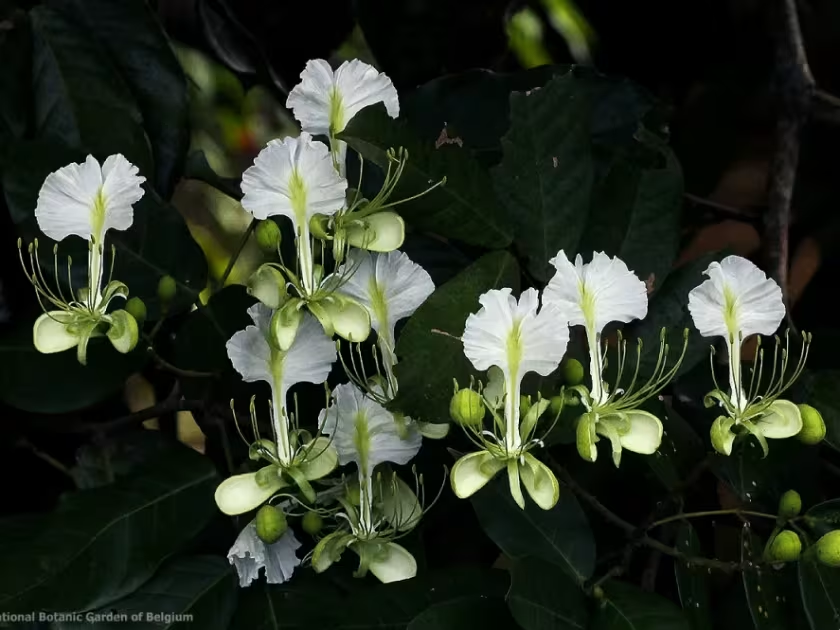
Description
Growing requirements
Berlinia grandiflora is a prominent leguminous tree belonging to the Fabaceae family, native to the tropical forests and wooded savannas of West and Central Africa.
The tree requires a humid tropical climate with consistent rainfall and high temperatures to reach its maximum growth potential and produce its characteristic large flowers.
It thrives in deep, well-drained soils that are rich in organic matter, which supports the nitrogen-fixing processes essential for the tree's development and soil enrichment.
In agroforestry systems, providing adequate space is critical, as the mature tree develops a wide canopy and a strong root system that can compete with neighboring flora.
Cultivation efforts should focus on soil moisture management, ensuring that the substrate does not become waterlogged while remaining sufficiently moist during the dry season.
Harvesting
The wood of Berlinia grandiflora is highly regarded in local and international markets for its durability, making it a valuable resource for high-quality furniture and flooring.
Beyond timber, various parts of the tree, including the bark and seeds, serve as important sources of traditional medicine used to treat common ailments and infections.
Seed harvesting is performed during the peak ripening phase when the pods turn brown, ensuring that the seeds are fully matured and suitable for propagation or research.
The chemical profile of the seeds is a subject of ongoing investigation, as they contain proteins and lipids that could potentially be utilized in future food security programs.
Sustainable harvesting practices are essential, as the uncontrolled removal of bark and wood can negatively impact the longevity and survival rates of these majestic trees.