
Bergia suffruticosa
Bergia suffruticosa
Description
Growing requirements
Bergia suffruticosa is a resilient perennial shrub belonging to the Elatinaceae family. It is natively adapted to harsh, arid environments, demonstrating remarkable survival mechanisms in low-rainfall regions across Africa and Asia.
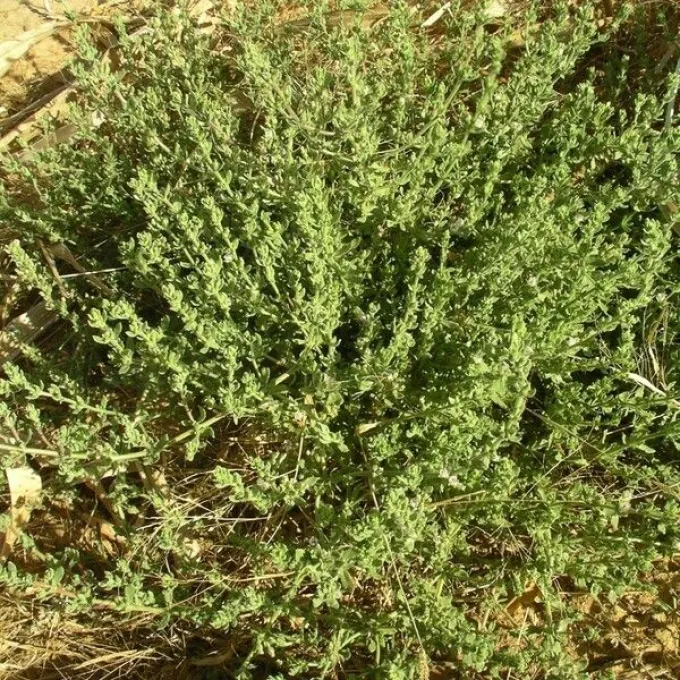
The botanical structure of this species includes a woody base and small, dense leaves that significantly reduce water loss through transpiration. Its root system is exceptionally deep, allowing it to tap into groundwater sources inaccessible to less adapted species.
In terms of agricultural requirements, this plant thrives in sandy or rocky soils with excellent drainage. It is highly intolerant of waterlogged conditions, which can lead to root decay, necessitating the selection of well-drained field sites.
Climate needs are centered around high heat and full sunlight. It performs best in desert or semi-desert environments where the temperature fluctuates significantly between day and night, as these stresses often trigger the production of beneficial secondary metabolites.
Cultivation practices focus on minimal intervention. Once established, the plant requires very little fertilization or irrigation, making it an ideal candidate for low-input agriculture in marginalized, arid land areas.
Harvesting
The agricultural and economic utility of Bergia suffruticosa primarily lies in its pharmaceutical potential. The plant is traditionally recognized for its antiseptic and anti-inflammatory properties, derived from its complex chemical profile.
Harvesting typically involves the selective cutting of the aerial parts during the peak flowering stage. This timing is critical to ensure that the biomass contains the maximum concentration of the desired essential oils and bioactive compounds.
Post-harvest management involves air-drying the collected material in controlled conditions to prevent the degradation of heat-sensitive compounds. Proper moisture control is essential to ensure long-term shelf stability of the dried raw material.
Beyond medicinal use, the crop serves an important role in land rehabilitation. Its ability to colonize degraded soils makes it a valuable plant for preventing soil erosion and improving soil structure in desertified landscapes.
Future research is exploring the integration of this plant into agroforestry systems as a protective cover crop, which could provide both economic benefits through raw material sales and ecological services to the host environment.