
Bergia ammannioides
Bergia ammannioides
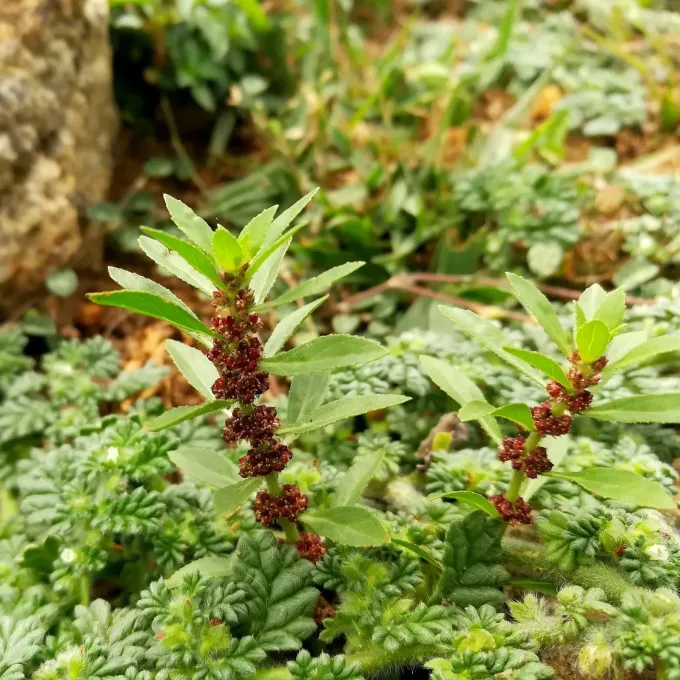
Description
Growing requirements
Bergia ammannioides is an annual herb belonging to the Elatinaceae family. It is characterized by its ability to thrive in moist environments, frequently colonizing habitats near water bodies.
The plant has a wide distribution across tropical and subtropical regions. It is well-documented in areas with significant seasonal rainfall and within irrigation systems where water levels fluctuate.
Requirements for growth include high light intensity, which supports the rapid development of its branching stems. It performs best in open areas where competition from taller plants is minimized.
Soil quality is a critical factor for successful growth; the plant favors silty or clay-rich substrates. These soils must be able to retain moisture effectively throughout the entire vegetative period.
While tolerant of waterlogging, the species requires adequate drainage at later stages of development to avoid the onset of hypoxic conditions in the root zone.
Main diseases and pests
In agricultural settings, Bergia ammannioides is often classified as a weed. Its presence in paddy fields necessitates active management to ensure it does not suppress the growth of primary crops.
Common threats include fungal pathogens that exploit the high humidity of the environment. These diseases can lead to tissue decay and significant reduction in biomass vitality.
Pest pressure is frequently observed from insects that specialize in aquatic or semi-aquatic plant consumption. These pests can damage leaf structures and weaken the stem tissues.
Effective management strategies incorporate careful water level control, which can limit the spread of seeds and prevent the establishment of dense populations in cultivated fields.
Integrated weed management, including cultural practices and chemical control, remains the standard approach to maintaining field productivity where this species is present.