
Begonia rajah
Begonia rajah
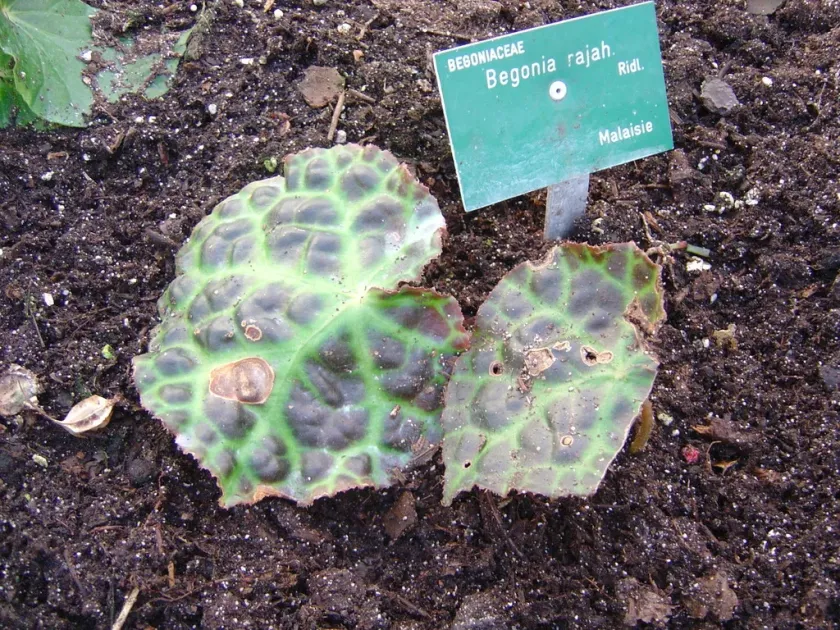
Description
Growing requirements
Begonia rajah is a rare and highly sought-after ornamental species belonging to the Begoniaceae family. Originating from the Malay Peninsula, this plant naturally thrives in the humid, shaded crevices of granite rocks in tropical rainforests.
To successfully cultivate this species, growers must replicate its natural environment. It requires high relative humidity, ideally between 80% and 90%, making it an excellent candidate for closed terrariums or specialized greenhouse sections where environmental control is possible.
The temperature range should be consistently warm, ideally between 22 and 26 degrees Celsius. Sudden drops in temperature or cold drafts can cause the plant to drop its leaves or suffer from physiological stress, which can lead to permanent damage.
Soil requirements focus on a very light, airy, and moisture-retentive medium. A mix of peat moss, sphagnum, perlite, and charcoal is recommended to ensure proper oxygenation of the roots while preventing waterlogging, which is a major risk for this species.
Botanically, Begonia rajah is characterized by its compact, low-growing habit and stunning bronze-to-green foliage with distinct, bright yellow or gold veins. Its textured, leathery leaves provide significant aesthetic appeal for advanced botanical collections.
Main diseases and pests
The primary threats to Begonia rajah health are fungal diseases resulting from poor air circulation and excessive moisture. Gray mold (Botrytis) is a frequent issue if the leaves remain wet for extended periods in a stagnant environment.
Root rot is perhaps the most critical threat in cultivation. It is usually caused by heavy substrates or overwatering, leading to the rapid decay of the root system. Proper drainage is the most effective preventative measure for this condition.
Pests such as spider mites and mealybugs can pose a severe threat, especially in drier conditions. These insects thrive in the tiny crevices of the foliage, quickly sapping the plant's vitality if not managed with targeted biological or chemical treatments.
Aphids can also occasionally infest the new growth of the plant. Their activity leads to curled leaves and inhibited development, necessitating close inspection of the growing tips during routine plant maintenance.
Environmental stress often makes the plant more susceptible to opportunistic pathogens. Ensuring that water quality is high, using only distilled or reverse osmosis water, prevents salt build-up that can weaken the plant's defense mechanisms.