
Copper leaf
Acalypha wilkesiana Müll. Arg.
Description
Growing requirements
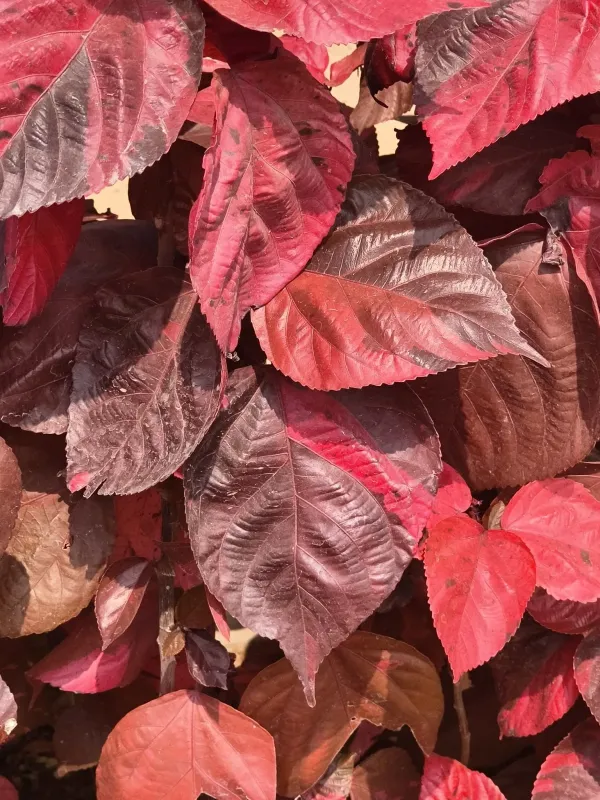
Copper leaf (Acalypha wilkesiana) is a prominent member of the Euphorbiaceae family. This tropical shrub is highly valued for its striking, multi-colored foliage and is native to the South Pacific islands.
As a tropical species, it thrives in warm environments with temperatures typically ranging between 18°C and 25°C. It is sensitive to cold drafts and should be protected from temperatures below 15°C.
Proper lighting is essential for maintaining its vibrant leaf color. It prefers bright, indirect sunlight throughout the day to ensure optimal photosynthesis and pigment development in the foliage.
The soil should be consistently moist but well-draining. A high-quality potting mix enriched with organic matter provides the necessary nutrients for the plant to produce its signature lush growth.
Regular pruning is a vital part of the plant's maintenance cycle. Removing dead or straggly branches encourages bushy growth and keeps the shrub within manageable dimensions for indoor cultivation.
Main diseases and pests
Spider mites are the most common pests that affect Copper leaf, especially in environments with low humidity. They typically settle on the undersides of leaves, causing discoloration.
Mealybugs and aphids can also infest the plant, drawing nutrients from the stems and leaves. Regular monitoring and physical removal can help control small populations before they spread.
Root rot is the primary disease risk associated with improper watering. If the substrate remains waterlogged for too long, the root system fails, often leading to total plant decline.
Fungal infections can appear as spots on the foliage. To prevent this, avoid wetting the leaves during the evening and ensure good air circulation around the entire plant.
If chemical intervention is necessary, always opt for systemic insecticides that are safe for ornamental indoor plants, strictly following the manufacturer's safety instructions.