
Balanophora japonica
Balanophora japonica
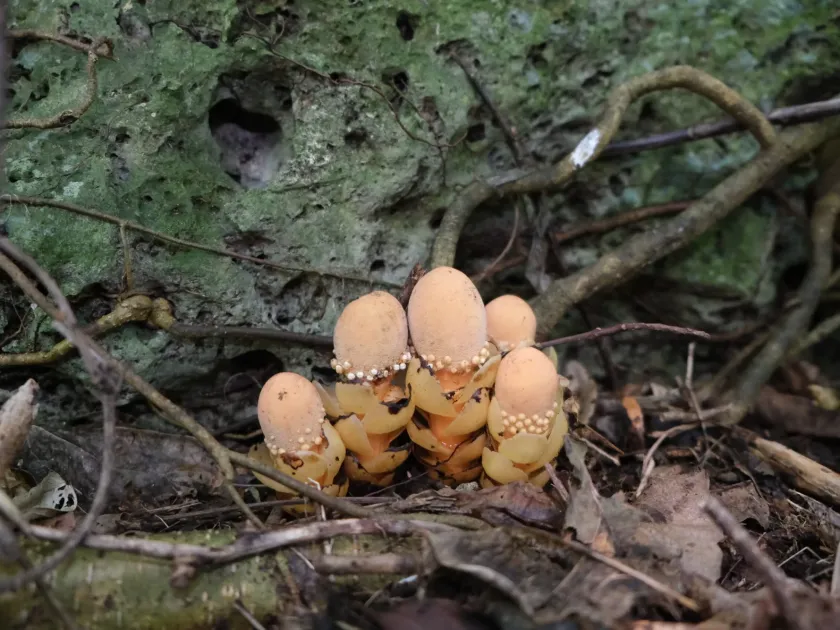
Description
Growing requirements
Balanophora japonica is a specialized parasitic plant species belonging to the Balanophoraceae family. It is distinct for being a non-photosynthetic organism that lacks traditional vegetative structures like green leaves or standard roots, relying entirely on a host plant for survival.
The native distribution of this plant includes the forest regions of Japan and neighboring parts of East Asia. It typically thrives in humid environments, establishing parasitic connections with the roots of various woody plants found in these dense forest ecosystems.
Morphologically, the plant develops a tuberous body that functions as an anchor and a conduit for nutrient extraction. Through specialized structures called haustoria, it penetrates the root system of the host, extracting water and solutes directly from the host's vascular tissues.
Habitat requirements are strictly tied to forest understories, characterized by high humidity levels and persistent shade. Exposure to direct sunlight is detrimental to the plant, as it is physiologically adapted only to the cool and moist conditions provided by the forest floor.
Regarding cultivation, Balanophora japonica is not categorized as an agricultural crop due to the complex biological dependencies required for its life cycle. It remains a subject of botanical and ecological study rather than commercial farming, serving as an indicator of healthy forest biodiversity.