
Balanophora involucrata
Balanophora involucrata
Description
Growing requirements
Balanophora involucrata is a specialized obligate parasitic plant belonging to the Balanophoraceae family. Unlike standard agricultural crops, it lacks chlorophyll and cannot perform photosynthesis, deriving its nutrition entirely from the root systems of host plants through specialized organs known as haustoria.
This species is native to the dense, humid mountain forests of Asia, particularly in the Himalayan region and parts of Southeast Asia. It thrives in shaded, moist environments where the soil is rich in organic matter, which is essential for the underground tuberous body from which the inflorescence emerges.
Environmental conditions for Balanophora involucrata are extremely strict. It requires a specific microclimate with high humidity levels and the continuous presence of healthy host plants to which it can attach. Exposure to direct sunlight or dry soil conditions is typically lethal to the developing inflorescence.
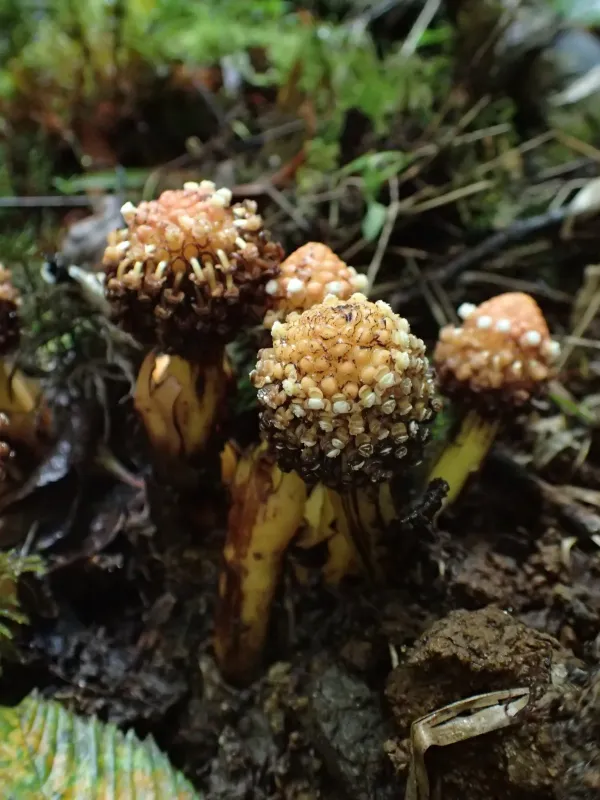
Botanically, the plant is characterized by a fleshy subterranean tuber and a dense, cone-like inflorescence protected by a distinct involucral bract. This unique structure allows it to survive in the forest floor litter, where it remains hidden until the reproductive phase when the flowering stem emerges above ground.
In terms of agricultural utility, this plant is not considered a cultivated crop. Due to its complex parasitic nature and dependence on specific host associations, attempts to farm or commercialize the species have proven unsuccessful. It is valued primarily in botanical research and within traditional ecological knowledge systems.
Main diseases and pests
The primary threats to Balanophora involucrata are habitat destruction, such as deforestation and land-use change, which disconnects the plant from its necessary host species. The loss of forest canopy directly impacts the soil moisture levels required for the tuber to survive.
Pathogenic fungi and soil-borne diseases pose a significant risk, particularly during periods of extreme dampness, which can cause the fleshy parts of the plant to decay. Because the species is so ecologically specialized, it lacks the resilience to adapt to significantly modified environments or agricultural disturbances.