
Balanites pedicellaris
Balanites pedicellaris
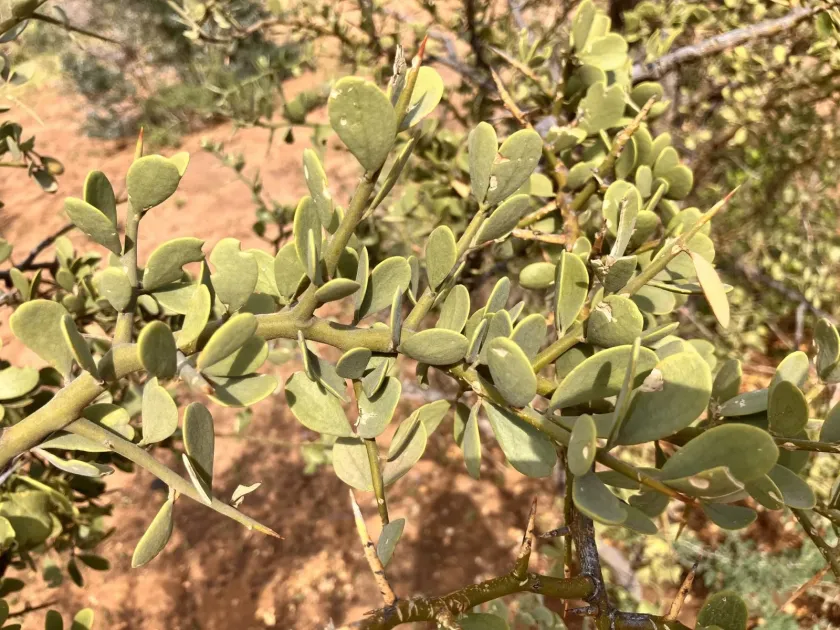
Description
Growing requirements
Balanites pedicellaris belongs to the Zygophyllaceae family. This woody plant is specifically adapted to survive in arid tropical regions where other crops struggle with extreme moisture deficits.
To ensure successful growth, the tree requires well-drained soils, preferably sandy or loamy substrates with a neutral to slightly alkaline pH. The crop is highly photophilous and requires full sun exposure throughout the day.
The plant exhibits high adaptability to sharp diurnal temperature variations. In its native range, it withstands prolonged drought periods by entering a state of physiological dormancy to conserve vital resources.
The root system is exceptionally well-developed, allowing the plant to extract moisture from deep soil layers. This makes the tree a valuable asset for savannah ecosystems and a promising species for stabilizing eroded soils.
The cultivation agrotechnics are minimal because the plant is naturally hardy, requiring neither intensive irrigation nor synthetic fertilization, as it is perfectly evolved for impoverished soil conditions.
Main diseases and pests
The most common diseases affecting this species are fungal infections exacerbated by high humidity levels. Excessive precipitation can lead to root collar rot, making proper site drainage a critical requirement.
Among pests, wood-boring insects and termites pose the greatest threat, as they can damage the trunk and structural branches of mature trees, thereby reducing overall yield and plant longevity.
Folivorous pests rarely cause critical damage because the plant utilizes defensive mechanisms, such as sharp thorns and specific chemical compositions in its tissues, to deter most insects.
To mitigate the spread of pathogens, agronomists advise maintaining optimal spacing between trees. Avoiding overcrowding improves crown aeration and significantly lowers the risk of disease outbreaks.
Monitoring plantation health is essential immediately following the rainy season, as this is when pathogenic fungi become active and may cause necrotic damage to the bark.
Harvesting
The economic use of Balanites pedicellaris centers on harvesting its fruits and seeds. The fruit possesses a complex composition of bioactive compounds, widely utilized in traditional medicine and local craft industries.
The harvest is typically performed manually after the fruits reach natural maturity. Seed oils are extracted for applications in both the food industry and as a base for artisanal cosmetic products.
The wood of this species is recognized for its high density and strength, making it a preferred material for local tool manufacturing, handicrafts, and durable outdoor construction.
Leaves and tender shoots serve as a vital fodder resource for livestock, particularly goats and camels, during the dry season when green biomass is otherwise scarce.
Primary processing focuses on the extraction of saponins and other secondary metabolites, which are of significant interest to the pharmaceutical sector for developing antiseptic and anti-inflammatory compounds.