
Balanites aegyptiaca
Balanites aegyptiaca
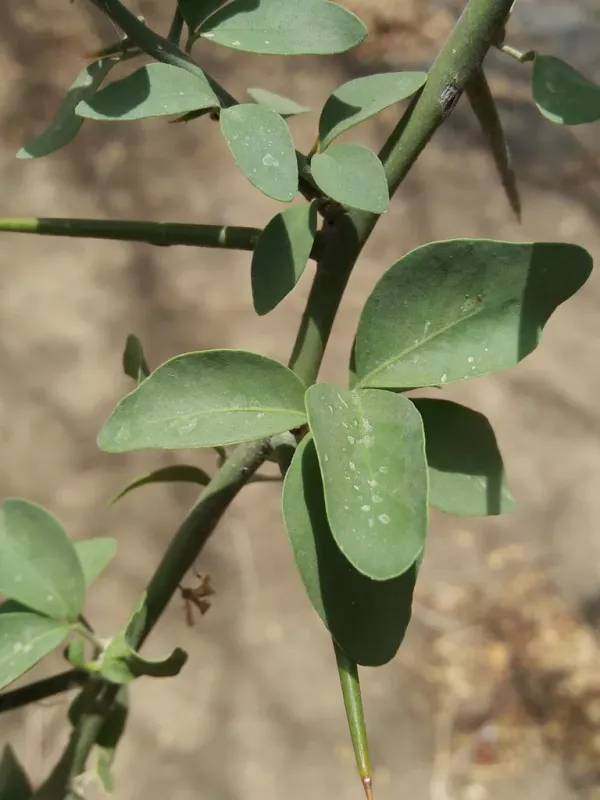
Description
Sowing dates
The propagation of Balanites aegyptiaca is primarily conducted via seeds. Sowing is ideally performed at the beginning of the rainy season to ensure that young seedlings have sufficient moisture to establish their deep taproot systems.
Seeds possess a hard, lignified endocarp, which often necessitates mechanical scarification to improve germination rates. Without pre-treatment, germination can be slow and sporadic due to the seed coat's dormancy.
When establishing plantations, a spacing of 5 to 10 meters between trees is recommended to allow for adequate crown development and to reduce competition for soil moisture in water-scarce environments.
Seedlings exhibit slow initial growth and are susceptible to competition from weeds. Therefore, keeping the planting site clean during the first two to three years is essential for the plant's survival.
Once established, the plant becomes remarkably resilient to drought conditions, as it is biologically hardwired to thrive in arid climates with minimal external inputs.
Growing requirements
Balanites aegyptiaca, belonging to the Zygophyllaceae family, is a slow-growing evergreen tree widely distributed across the Sahel and arid regions of the Middle East. It is perfectly adapted to survive in zones with extended drought periods.
The species is highly versatile regarding soil types, performing well in sandy, loamy, and even clay soils. It is notably tolerant of saline conditions, making it an excellent candidate for rehabilitating degraded land.
Climatically, it requires high temperatures to thrive and is sensitive to frost. It can survive in regions with annual rainfall as low as 200 mm, though productivity increases significantly in areas receiving 500–800 mm.
Botanically, it is a thorny tree reaching up to 10 meters in height. Its sharp thorns and tough bark provide natural protection against browsing by herbivores in resource-depleted environments.
Full sun exposure is a strict requirement for this culture. It does not tolerate shade, as even partial canopy coverage by taller trees significantly reduces its photosynthetic efficiency and yield.
Yield
The primary economic output of the tree is its fruit, commonly known as the "desert date." The fruits contain a fleshy pulp and a single hard seed, which is a rich source of high-quality vegetable oil.
Trees typically reach reproductive maturity between 5 and 7 years of age. Yields increase progressively as the tree ages, with mature specimens capable of producing consistent annual harvests.
A single mature, healthy tree can yield between 100 and 150 kg of fruit per season, depending on the availability of water during the flowering and fruit-setting stages.
Beyond the oil-rich seeds, the tree is a valuable multi-purpose resource. The leaves are used as protein-rich fodder for livestock, while the dense wood is highly prized for tool handles and fuel.
The oil derived from the kernels is increasingly sought after for culinary, medicinal, and cosmetic applications, and has shown significant potential as a sustainable biofuel feedstock.
Main diseases and pests
Balanites aegyptiaca is remarkably robust and possesses high natural resistance to pests and diseases, largely due to the high concentration of saponins within its tissues.
Few significant diseases impact this species. However, excessive soil moisture or poor drainage can lead to root rot, which is rarely a problem in its native, arid, and well-drained habitats.
Young seedlings are most vulnerable to damage by rodents, hares, and livestock. Protection of juvenile trees using physical barriers or guards is often necessary in managed plantation settings.
Insects like locusts may occasionally cause defoliation during outbreaks, but the tree typically recovers well once the infestation subsides, demonstrating a high degree of resilience.
As the plant ages, it becomes virtually immune to most agricultural pathogens, making it an ideal candidate for low-input, organic agricultural systems in harsh environments.
Harvesting
Harvesting is mainly manual, involving the collection of ripe fruits that have fallen to the ground or by carefully knocking them from the branches using poles when they turn yellow-brown.
Once gathered, the pulp is stripped from the fruits for human consumption or animal feed. The remaining stones are then sun-dried thoroughly to prevent microbial growth and ensure high-quality oil extraction.
Storage of the cleaned seeds must occur in dry, well-ventilated areas to prevent rancidity of the seed oil. Proper storage allows for processing throughout the year, independent of the harvest season.
Wood harvesting is limited to sustainable pruning or the removal of senescent trees. Given its slow growth rate, clear-cutting is not a viable strategy; rather, selective management is preferred.
Due to the stability of the kernel and the durability of its contents, the crop is highly suitable for storage and transport, which is essential for economic viability in remote desert locations.