
Eastern Baccharis
Baccharis halimifolia L.
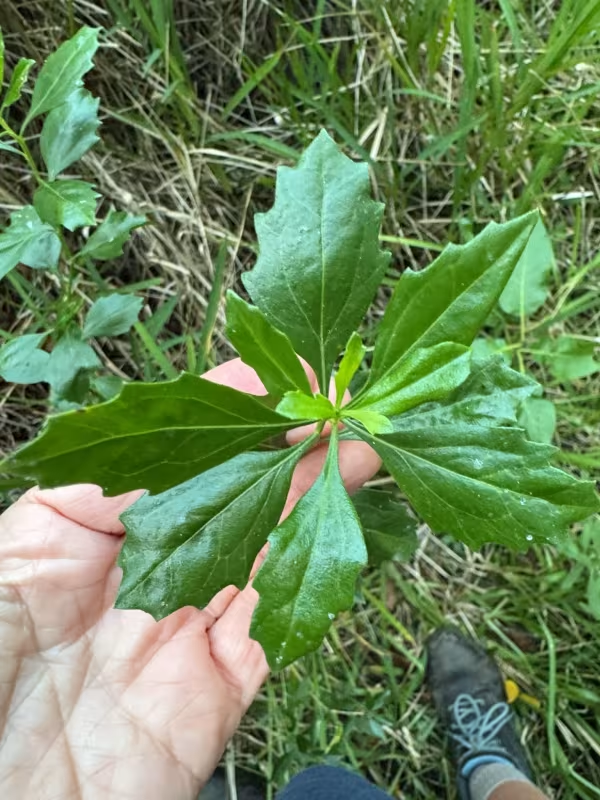
Description
Growing requirements
Baccharis halimifolia, commonly known as Eastern Baccharis, is a hardy woody shrub belonging to the Asteraceae family. It is increasingly utilized in agricultural settings for erosion control and as an ornamental buffer plant.
The species is native to coastal regions of North America, where it has evolved to thrive in high-salinity conditions. Its natural distribution spans from temperate to subtropical climates, demonstrating significant environmental plasticity.
Cultivation requires full sun exposure to ensure optimal growth and dense foliage. It is remarkably adaptable to various soil types, performing well in saline, sandy, or marshy soils that are typically unsuitable for traditional crops.
Regarding climate, the plant prefers areas with moderate rainfall but displays high tolerance for saline aerosols and wind exposure. It can withstand short-term flooding, making it an excellent candidate for coastal land reclamation projects.
Management practices emphasize pruning for shape and controlling the spread. Due to its prolific seed production, agricultural planners must carefully manage its growth to prevent the plant from becoming invasive in adjacent fields.
Main diseases and pests
Baccharis halimifolia generally exhibits strong resistance to major crop pests and diseases, which significantly reduces the need for chemical intervention in its cultivation.
Powdery mildew can occur under conditions of poor air circulation, especially in humid environments, potentially causing leaf drop and weakening the overall plant structure.
Insects like aphids and leaf miners may occasionally infest young shoots, although they rarely cause permanent damage to established, healthy specimens in the field.
Root system health is vital; excessive soil moisture and lack of aeration can lead to root rot. Therefore, selecting well-draining planting sites is critical for successful long-term establishment.
Cultural control measures, such as timely pruning and monitoring for volunteer seedlings, are essential to maintain the ecological balance and prevent the shrub from overcrowding productive agricultural lands.