
Austroderia richardii
Austroderia richardii
Description
Sowing dates
Seeds of Austroderia richardii should be sown in late winter or early spring in a greenhouse or indoor environment. Cold stratification for about 3–4 weeks is recommended to improve germination rates.
Sow seeds on the surface of a light, well-draining potting mix, as they require light to germinate. Press them gently into the substrate and keep them consistently moist but not waterlogged.
Once seedlings have developed a few sets of true leaves, they should be transplanted into individual pots. Providing bright, indirect light is essential for healthy and sturdy development.
Transplanting into the permanent outdoor location should only occur once all danger of frost has passed. Ensure the site receives full sun to facilitate robust growth throughout the season.
Propagation can also be achieved by dividing established clumps in spring. This method is preferred for preserving specific growth habits and achieving faster establishment in the garden.
Growing requirements
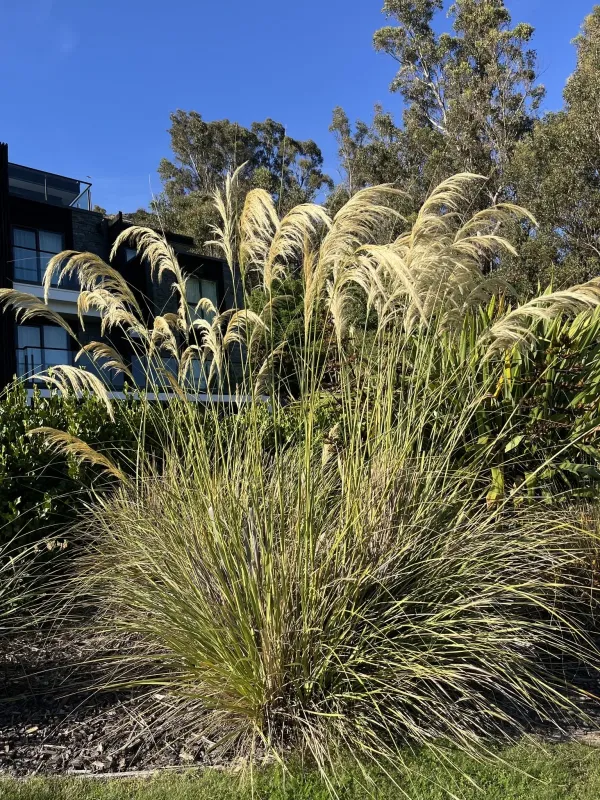
Austroderia richardii, commonly known as toetoe, is a member of the Poaceae family native to New Zealand. It is an impressive ornamental grass characterized by its distinct, arching flower plumes.
The plant requires fertile, well-drained soil to thrive. It is particularly sensitive to winter moisture; therefore, excellent drainage is crucial to prevent the crown from rotting during the colder months.
Full sun exposure is necessary for the plant to produce its signature inflorescences. While it prefers shelter from high winds, it is generally sturdier than many other ornamental grasses.
Botanically, it forms large, robust clumps with narrow, serrated leaves. The plumes appear in summer, providing vertical interest that persists well into the autumn and early winter.
In landscaping, it is used for architectural impact in large gardens or as a focal point. It is highly valued for its naturalistic aesthetic and the graceful movement of its plumes in the wind.
Main diseases and pests
Fungal leaf spot diseases can occur during prolonged periods of wet and humid weather. Maintaining proper spacing and air circulation around the plants significantly reduces these risks.
Aphids and spider mites may occasionally infest the foliage, particularly during hot and dry spells. Regular inspection is recommended to detect and treat these pests at an early stage.
Crown rot is the most serious threat, usually associated with poorly drained soils or excessive moisture during winter. Adding inorganic materials like grit to the soil can prevent water accumulation.
In regions with harsh winters, improper winter protection can lead to tissue damage. Ensure any winter coverings are breathable to prevent trapped moisture from causing decay.
Care should be taken when handling the plant, as the leaf margins can be sharp. Damaged foliage can serve as an entry point for pathogens, so pruning should be done cleanly.