
Garden orache
Atriplex hortensis L.
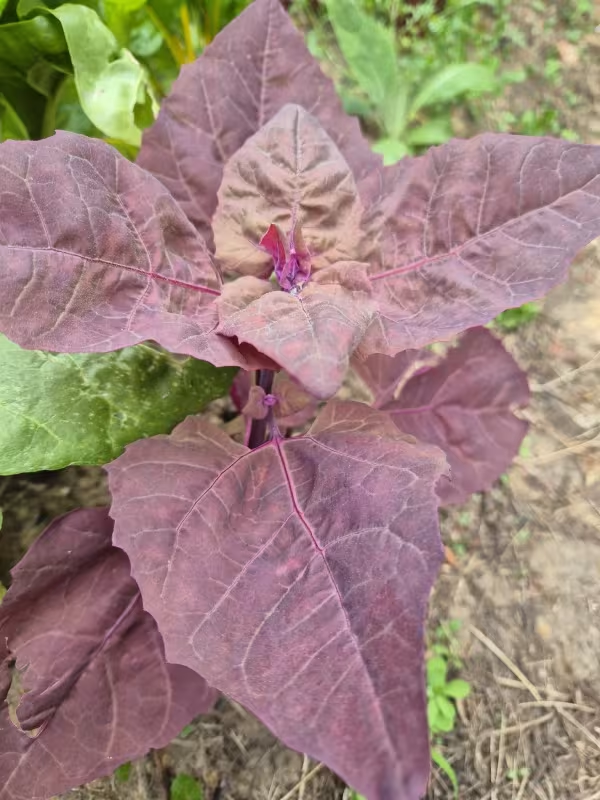
Description
Sowing dates
Garden orache is a cool-season crop that thrives in early spring; seeds can be sown directly into the soil as soon as it can be worked, typically in April or May.
For a continuous supply of fresh, tender leaves throughout the season, it is recommended to sow seeds in successive batches every 2 to 3 weeks until the summer heat intensifies.
Seeds should be planted at a depth of 1.5–2 cm in rows spaced 30–40 cm apart to ensure proper air circulation and to facilitate easy weeding and maintenance.
Once seedlings have reached the two-leaf stage, thin them to a distance of 20–25 cm apart, allowing each plant enough space to develop a robust, productive leafy rosette.
Late autumn sowing is also possible in milder climates, allowing the seeds to germinate early in the spring, providing a head start on the gardening season.
Growing requirements
As a member of the Amaranth family, garden orache prefers sunny locations with fertile, well-draining soil that is rich in organic matter and maintains consistent moisture.
The plant is highly adaptable and hardy, capable of tolerating light frosts, but it grows most rapidly in temperate conditions with a soil pH between 6.0 and 7.5.
Adequate soil fertility is crucial for high yields, so adding compost or well-rotted manure during ground preparation significantly boosts the development of succulent foliage.
Regular watering is essential, especially during dry spells; if the plant experiences prolonged water stress, it may bolt prematurely, leading to bitter and tough leaves.
Mulching the soil around the plants helps to retain essential moisture and suppress competitive weeds, which is particularly important during the early stages of plant growth.
Yield
The yield of garden orache depends heavily on variety and soil health, typically ranging from 2 to 3 kilograms of edible greens per square meter of cultivated land.
Frequent harvesting of outer leaves encourages the plant to continue producing new growth from the central crown, extending the harvest period for several weeks.
Yields are maximized by ensuring the plants remain in a vegetative state, which requires removing any emerging flower stalks as soon as they are spotted in the garden.
Red-leaved varieties are prized for both their culinary use and ornamental value, though they may have slightly slower growth rates compared to standard green cultivars.
Optimal yields are also supported by balanced nitrogen-rich fertilization, which promotes rapid leafy development, especially after each significant harvest cycle.
Main diseases and pests
Aphids are the most common pest for orache, often clustering on the undersides of leaves and leading to stunted growth, leaf curling, and overall plant decline.
In humid or crowded conditions, plants can be susceptible to powdery mildew, a fungal disease that appears as a dusty white coating on the leaves and stems.
Leaf miners can also pose a problem, creating serpentine tunnels inside the leaf tissue that render the foliage unattractive and unsuitable for fresh consumption.
Management of these threats should prioritize cultural practices, such as maintaining proper plant spacing and avoiding overhead watering, rather than relying on chemical pesticides.
Rotating crops away from other Amaranth family members, such as spinach or beets, is a recommended preventative measure to reduce the buildup of soil-borne diseases.
Harvesting
Harvesting usually begins about 30 to 40 days after sowing, once the plants reach a height of 15–20 cm and the leaves are large enough for use in salads or cooking.
It is best to pick leaves early in the morning when the plant has high water content, ensuring the greens are crisp, fresh, and hold up well after being gathered.
Use clean shears to harvest outer leaves or the entire rosette, being careful not to damage the base of the plant so that it can continue to send up new foliage.
Immediately after harvest, store the greens in a cool, shaded area or refrigerator to prevent wilting, as the leaves can lose their quality quickly in warm temperatures.
For fresh storage, place the greens in ventilated plastic bags inside the refrigerator, where they will remain viable for 3 to 5 days if kept at proper temperatures.