
Atraphaxis billardieri
Atraphaxis billardieri
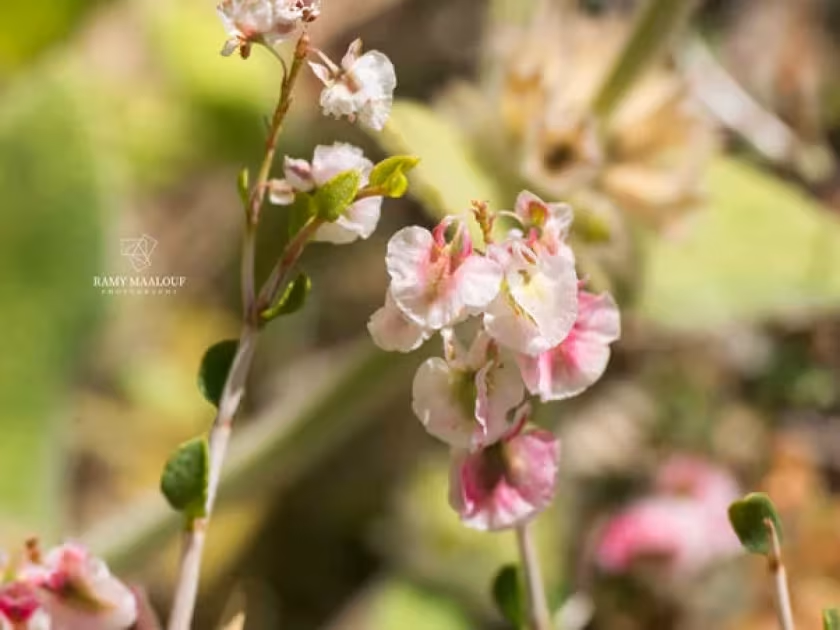
Description
Growing requirements
Atraphaxis billardieri is a deciduous shrub belonging to the Polygonaceae family. It is a resilient plant naturally adapted to arid environments, particularly in regions with limited rainfall and high solar radiation.
The plant thrives in rocky, sandy, or poor-quality soils where nutrients are scarce. Its primary strength lies in its expansive and deep root system, which allows it to access moisture in dry terrains where many other species would fail.
Optimal growth requires full sun exposure. This species is an obligate heliophyte, meaning it needs maximum light to maintain its structural integrity and health. Shade exposure leads to weak, spindly stems and reduced vitality.
Water management is critical, as this plant is extremely sensitive to waterlogging. It requires excellent soil drainage, as standing water around the roots quickly leads to root rot and eventual plant collapse.
Agrotechnical practices for this species should be minimal. Because it is highly adapted to harsh environments, it generally requires no fertilization and thrives best when left undisturbed in well-drained, porous soils.
Yield
The primary use of Atraphaxis billardieri is in land restoration and phytoremediation. Its ability to stabilize soil makes it an excellent candidate for preventing erosion on steep slopes and stabilizing sandy ground.
In landscaping, it serves as a decorative element for xeriscaping or rock gardens. Its unique growth habit and ability to withstand neglect make it a practical choice for public parks or areas with minimal maintenance resources.
The species also plays a role in windbreak creation. By planting these shrubs in rows, agricultural land managers can effectively reduce ground-level wind speeds, protecting more sensitive crops from wind erosion.
It acts as a beneficial plant for local insect pollinators in semi-arid areas, contributing to biodiversity. Providing a stable habitat for these insects is an essential ecological service in degraded semi-desert ecosystems.
Though not grown for traditional harvestable produce, its economic value is measured by its utility in rehabilitating abandoned or degraded lands and creating stable vegetation barriers in hot, dry climates.
Main diseases and pests
Atraphaxis billardieri is exceptionally resistant to common agricultural diseases. Its natural evolutionary adaptation to harsh environments has provided it with robust defense mechanisms against most fungi and bacterial pathogens.
Pest pressure on this shrub is negligible. The tough texture and chemical composition of its foliage act as a natural deterrent, making it resistant to most common defoliating insects that plague other decorative bushes.
Weed competition represents the biggest threat during the establishment phase. Young plants must be kept free of competing grasses and weeds to ensure they do not lose access to essential soil moisture and light.
Winter hardiness can be a concern in cooler regions. While resilient, the plant may suffer from tip dieback during sudden cold spells, so choosing a sheltered, sun-warmed location is advisable for successful cultivation.
To ensure long-term health, proper spacing between plants is required. Maintaining adequate airflow around the canopy helps prevent the buildup of humidity, which is the only real factor that could lead to plant disease.