
Astelia
Astelia hybrids
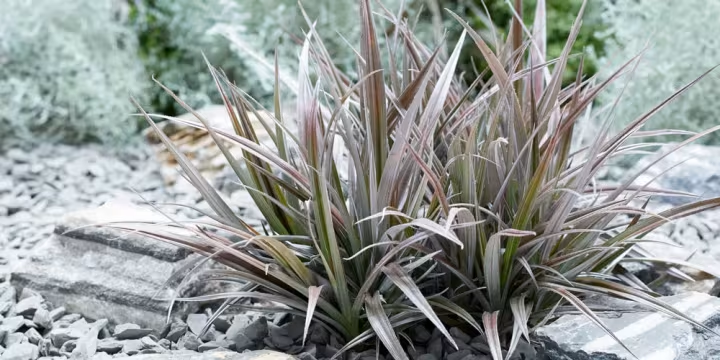
Description
Growing requirements
Astelia hybrids belong to the Asteliaceae family. These plants are known for their striking, sword-shaped foliage that often displays a metallic, silver, or bronze sheen. They are native to the Southern Hemisphere, primarily found in New Zealand, Australia, and various Pacific islands.
The plant grows in a basal rosette form, with foliage texture adapted to capture moisture and nutrients. In their natural habitat, they are often epiphytic or grow in nutrient-rich forest floors, which dictates their specific requirements for a loose, well-draining growing medium.
For successful cultivation, Astelia requires an acidic to neutral potting mix rich in organic matter. Good drainage is non-negotiable, as the roots are prone to suffocation if the medium becomes waterlogged. Adding perlite or pine bark is essential to maintain soil structure.
Regarding light, these plants prefer bright, indirect light. While they can tolerate some morning sun, excessive exposure to harsh afternoon rays can scorch the foliage, especially in hybrid varieties with delicate silver coatings. Consistent ambient humidity is also crucial for their development.
The ideal temperature for Astelia is moderate and stable. They are not frost-hardy, so in cooler climates, they should be treated as conservatory or houseplants. Protecting them from cold drafts and extreme fluctuations in temperature is necessary to maintain foliage health.
Main diseases and pests
The most significant threat to Astelia is root rot, typically caused by overwatering or poor drainage. This condition quickly affects the base of the rosette, leading to leaf drop and plant death. Ensuring that the soil dries out slightly between waterings is a key management strategy.
Pests such as scale insects and mealybugs are common, particularly in indoor environments. They tend to hide in the tight spaces between the leaves. Regular inspection of the plant's base and early intervention with insecticidal soap are effective methods of control.
Spider mites can become an issue in low-humidity environments. These pests thrive in dry conditions and can cause the foliage to lose its vibrant coloration. Increasing humidity through misting or using a humidifier can prevent mite infestations effectively.
Leaf spot diseases can occur if the plant is kept in an environment with poor air circulation. Removing affected foliage and improving ventilation helps stop the spread of fungal pathogens that target damaged or stressed leaf tissue.
General plant care, including balanced fertilization and avoiding excess nitrogen, helps strengthen the foliage against secondary infections. Maintaining a clean growing area and inspecting new plants before introducing them to the collection are essential biosecurity measures.