
Asclepias oenotheroides
Asclepias oenotheroides
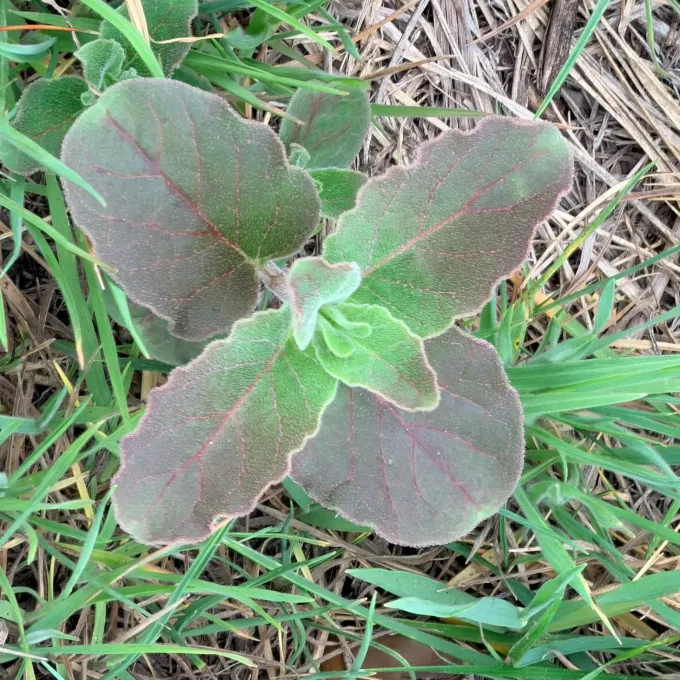
Description
Sowing dates
Asclepias oenotheroides, commonly known as Zizotes milkweed, belongs to the Apocynaceae family. It is a perennial herbaceous plant native to the southwestern United States and Mexico. Sowing is typically carried out in the spring when soil temperatures reach 15–20 degrees Celsius.
Seeds possess a thick coat, requiring stratification or soaking to ensure uniform germination. Planting is usually done in rows with a spacing of 45–60 centimeters, allowing the plants sufficient space for their deep-rooted development.
The planting depth is recommended at 1.5–2 centimeters. During the establishment phase, the seedlings grow slowly, making weed control a crucial aspect of early cultivation to prevent competition for light and nutrients.
The plant features a strong taproot, which allows it to thrive in various environments once established. It is a perennial crop, meaning it can be productive over multiple growing seasons without the need for annual reseeding.
Optimal plant density depends on the specific agricultural goals: higher densities are used for biomass production, while lower densities are preferred for seed harvest to allow for maximum reproductive output.
Growing requirements
This species requires full sun exposure to thrive. Shade significantly reduces the quality of the stems and negatively impacts the overall production of biomass, making open fields the preferred location.
Soil requirements focus on well-draining textures, such as sandy or loamy soils. Waterlogging is detrimental to the plant, as it predisposes the roots to rot; therefore, selecting sites with good drainage is mandatory.
Zizotes milkweed is highly drought-tolerant once established, thanks to its deep root system. Fertilizer application should be moderate, as excess nitrogen can lead to succulent growth that is more prone to lodging and pests.
The plant adapts well to a variety of warm-to-hot climate conditions. While it can handle light frost, it requires consistent warmth during the growing season to maximize its biomass accumulation.
The ideal soil pH is between 6.5 and 7.5. Minimal irrigation is required once the plant is mature, reducing the necessity for intensive water management systems in large-scale fields.
Yield
The economic value of Asclepias oenotheroides lies primarily in its fibrous stems, which can be harvested for industrial use. The yield of green mass depends heavily on soil fertility and adequate management during the growing season.
Beyond fiber, the plant serves as a late-season nectar source, proving valuable for pollinators. It is also an effective species for soil stabilization and restoring degraded lands due to its persistent root system.
The latex produced within the plant is of interest to the chemical industry as a potential natural rubber source. Although commercial production is currently limited, the species represents a sustainable resource.
Fiber quality and yield are optimal when the harvest is performed during the flowering stage. Late harvesting results in more lignified stems, which are less suitable for textile-grade fiber but potentially better for biofuel.
Improving yields is a target for future breeding programs, focusing on increasing the height and standability of the stems to optimize mechanical harvesting efficiency.
Main diseases and pests
The plant is naturally resistant to many pests due to the presence of cardiac glycosides and sticky latex in its tissues, which act as chemical defense mechanisms against herbivores.
However, young seedlings are vulnerable to soil-dwelling pests like wireworms. In high-humidity environments, fungal pathogens such as powdery mildew may occasionally affect the foliage.
Aphids are the most common insects that colonize the plant, particularly during the flowering period, potentially reducing seed production if infestations are severe.
- Powdery mildew — managed with fungicides during wet spells.
- Root rot — prevented by avoiding over-irrigation.
- Aphid colonies — managed through integrated pest management or biological control.
Regular field scouting allows producers to identify pest pressure early, ensuring the health of the crop and maintaining the integrity of the plant tissues until harvest.
Harvesting
Harvesting for fiber is typically timed with the peak of the flowering stage, ensuring high cellulose content before the plant allocates too much energy into seed production.
For seed collection, timing is critical. As the follicles begin to dry and crack open, harvesting must be rapid to prevent the loss of seeds through wind dispersal, which is the plant's natural method of propagation.
Primary processing involves drying the harvested stems to separate the fiber. Proper drying is essential to prevent mold growth, which would compromise the quality of the final product.
When the crop is managed for honey production, the harvest is avoided or delayed until the end of the season when the plant naturally begins to senesce.
Mechanical harvesting is generally performed using forage harvesters, especially when the goal is to produce biomass for industrial fiber or energy applications.