
Arisaema loureirii
Arisaema loureirii
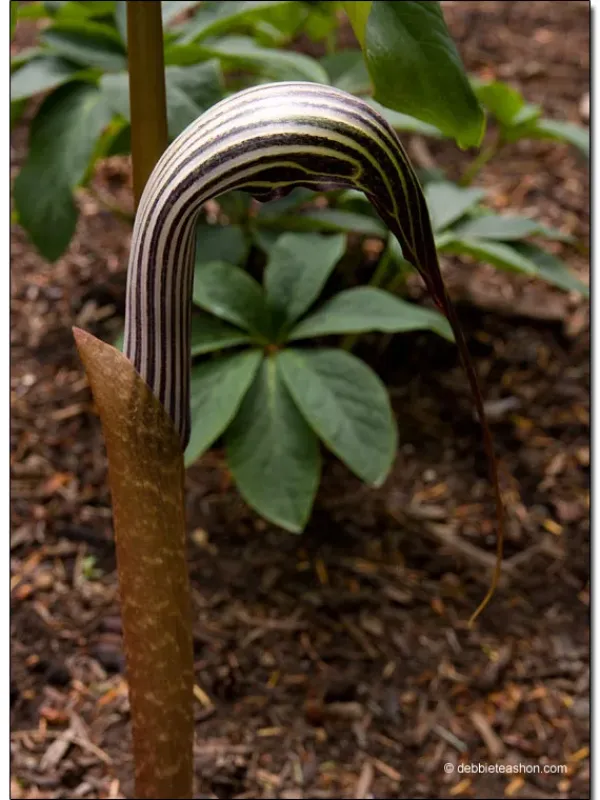
Description
Growing requirements
Arisaema loureirii belongs to the Araceae family and is a specialized tuberous perennial native to East Asian woodlands. This species is highly valued by collectors and enthusiasts for its unique inflorescence and shade-tolerant nature.
The culture thrives in environments that mimic its natural habitat. It requires a well-drained, porous substrate rich in organic matter. A mix of leaf mold, sand, and pine bark creates the ideal growing medium for healthy tuber development.
Light management is essential for Arisaema loureirii. It prefers partial to full shade throughout the growing season. Direct exposure to intense sunlight can burn the foliage and dehydrate the plant prematurely.
Watering requirements are strict: the soil must remain consistently moist during the growth cycle but never waterlogged. Once the leaves begin to yellow in late summer, watering should be reduced gradually to prepare the plant for its dormancy phase.
The species requires a cool, quiet winter rest period. Tubers should be stored in a cool, dry place if the climate is too cold for wintering outdoors, ensuring the temperature remains above freezing but below 15°C to prevent exhaustion of the storage organs.
Main diseases and pests
Root and tuber rot are the primary health threats to Arisaema loureirii. These are almost exclusively caused by overwatering or soil that lacks adequate aeration, leading to anaerobic conditions that foster fungal growth.
Slug and snail infestations are significant during the early spring when new growth emerges from the soil. These pests can consume entire shoots in a single night, requiring vigilant monitoring or the use of protective barriers.
Spider mites are common in drier indoor or greenhouse environments. They tend to settle on the undersides of leaves, and their presence can be identified by fine webbing and yellow stippling on the foliage.
Viral infections can manifest as mottling or distorted growth in the leaf blades. Since there is no cure, preventing vector insects like aphids is the most effective management strategy to ensure the longevity of the plant collection.
Nutritional deficiencies are rare if the soil is properly amended with compost, but an excess of synthetic fertilizers can burn the sensitive root system. Organic slow-release fertilizers applied in early spring are the safest option.