
Argyranthemum tenerifae
Argyranthemum tenerifae Humphries
Description
Sowing dates
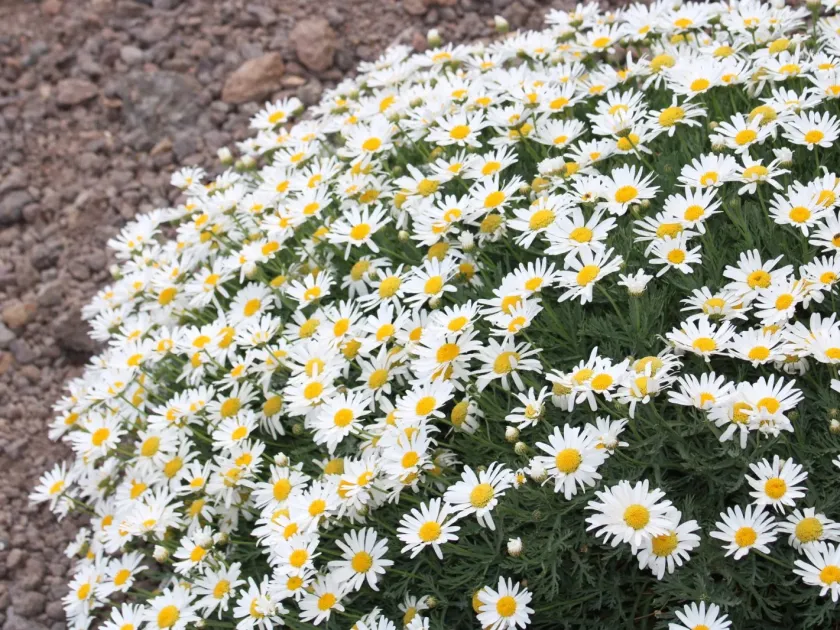
Argyranthemum tenerifae is a shrubby perennial plant belonging to the Asteraceae family. It is known for its delicate foliage and long-lasting floral display, native to the Canary Islands.
Propagation is typically performed via seeds sown in early spring in a greenhouse. The seeds require consistent warmth and high-quality, well-draining germination media to sprout effectively.
Seedlings are pricked out into individual pots once they develop true leaves, ensuring that they receive adequate spacing to prevent elongation and etiolation of the stems.
Acclimatization is a mandatory step before transplanting the plants to their final location. Gradual exposure to outdoor conditions helps the plants develop stronger, woody stems.
When planting in open fields, choose a location with excellent drainage and full sun, ensuring the soil is prepared with organic matter and sand for better structure.
Growing requirements
This species requires high light intensity to maintain a compact growth habit. In low-light conditions, the plants become leggy and produce significantly fewer flowers.
The soil should be sandy or loamy with an acidic to neutral pH. Excellent drainage is non-negotiable, as the roots are highly susceptible to rot if water persists in the soil.
Temperature management is critical; while the plant thrives in mild conditions, it requires protection from extreme cold and should be kept away from frost-prone areas.
Watering should be balanced. Allow the top layer of the soil to dry out between applications to mimic the natural, airy conditions of its native island habitat.
Periodic pruning is recommended to promote lateral branching, which increases the density of the shrub and the subsequent abundance of flowers throughout the season.
Main diseases and pests
Root rot is the most common physiological disorder caused by overwatering or poorly aerated growing media. It is often detected by the yellowing of the lower foliage.
Aphids are the primary pest concern, tending to cluster on the undersides of leaves and around floral buds. Manual removal or insecticidal soap application is often sufficient.
Powdery mildew can affect the leaves during periods of high humidity and poor ventilation. Keeping the plant foliage dry and ensuring airflow are effective preventive measures.
Spider mites can become problematic in dry and hot conditions, leading to mottled leaves and webbing. Regular misting or acaricide treatment helps in managing infestations.
Whiteflies are another potential threat in protected cultivation environments, necessitating the use of yellow sticky traps or integrated pest management strategies.