
Coral vine
Antigonon leptopus Hook. & Arn.
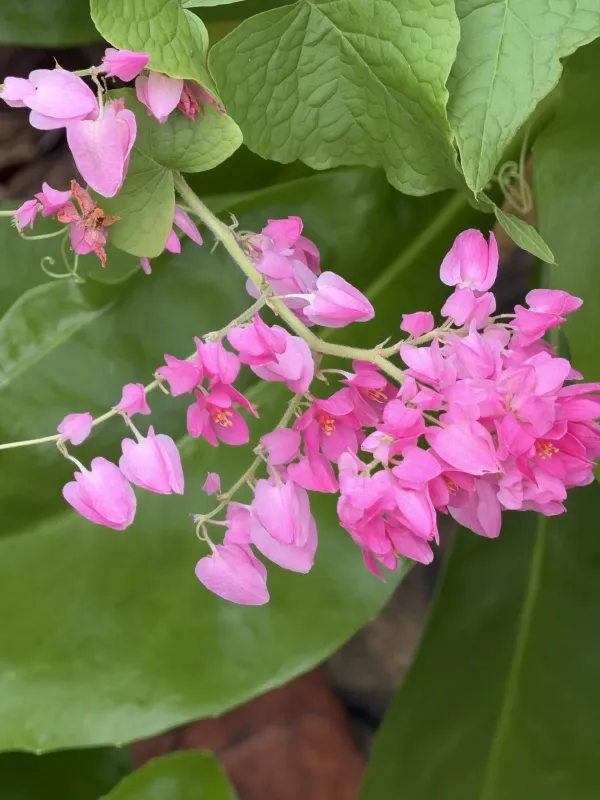
Description
Growing requirements
Coral vine, scientifically known as Antigonon leptopus, belongs to the Polygonaceae family. This vigorous, climbing vine is native to Mexico and Central America and is widely cultivated in tropical and subtropical regions across the globe.
The plant thrives in full sun, which is essential for prolific flowering throughout the growing season. While it is adaptable to various soil types, it performs best in well-draining, nutrient-rich soils that prevent water stagnation at the roots.
Temperature sensitivity is a major factor in its cultivation; Antigonon leptopus is highly susceptible to frost and requires a warm, sheltered climate to maintain its perennial growth habit. In cooler areas, it is often treated as an annual or grown in pots.
Agronomic management involves providing sturdy vertical support structures, such as fences or pergolas, to accommodate its rapid growth rate. Pruning is necessary during the dormant season to manage its size, remove dead biomass, and encourage fresh, flowering shoots.
Economically, the plant is highly valued as a significant nectar source for bees and other pollinators, often labeled as a premier honey plant. Beyond its ecological role, it is a popular choice for rapid screening and aesthetic cover in home and public landscapes.
Main diseases and pests
Common pests affecting Coral vine include aphids, mealybugs, and scale insects, which may infest the tender stems and foliage. Integrated pest management strategies, including the use of systemic insecticides or horticultural soaps, are usually effective.
Root rot caused by fungal pathogens is the most common disease, resulting from overwatering or poorly drained soil conditions. Maintaining a proper irrigation schedule and ensuring soil aeration are the primary preventative measures for healthy vine development.