
Cow parsley
Anthriscus sylvestris (L.) Hoffm.
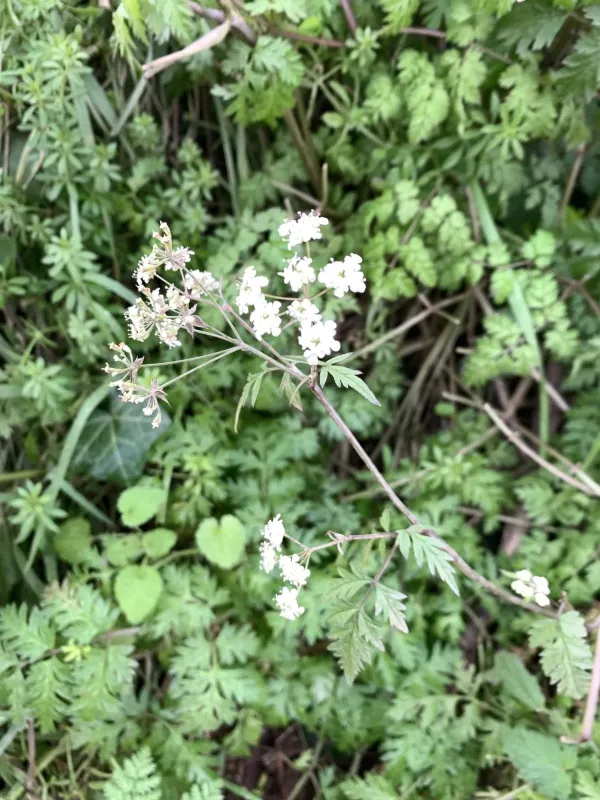
Description
Sowing dates
Cow parsley, scientifically known as Anthriscus sylvestris, is a perennial herbaceous plant belonging to the Apiaceae family. In agricultural contexts, it is recognized as a hardy crop with potential for early seasonal forage production.
Sowing should ideally occur in late autumn to allow for natural stratification, which is crucial for uniform germination in early spring. Alternatively, spring sowing immediately after the soil thaws can be effective in climates with sufficient moisture.
Seeds are typically sown at a shallow depth of 1–2 cm to ensure optimal emergence. Row planting with a spacing of 45 cm is recommended to allow for easy weed management and mechanical harvesting of the foliage.
The plant demonstrates high vigor early in the season, which helps it establish quickly. Using high-quality, viable seeds gathered from selected mother plants ensures a more robust and uniform stand for the agricultural cycle.
Proper plant spacing is essential to prevent overcrowding, which can lead to reduced plant health and poor root development. Thinning may be necessary if the initial seeding density exceeds the recommended standards for the crop.
Growing requirements
Cow parsley thrives in a variety of soil types but performs best in well-drained, fertile loams with high organic content. The plant prefers neutral to slightly acidic soil conditions to maximize nutrient uptake.
The crop is highly shade-tolerant, making it suitable for intercropping or cultivation in areas with partial sun. However, maximum biomass production is typically achieved in open fields with consistent soil moisture levels.
It exhibits remarkable cold tolerance, allowing the plant to overwinter successfully even in harsh conditions. It begins active vegetative growth as soon as temperatures rise, providing an early source of green fodder.
Moisture management is key, particularly during the stem elongation phase. Drought stress can trigger premature flowering, which significantly reduces the quality and quantity of the harvestable green biomass.
Moderate nitrogen fertilization can boost leaf production significantly. However, it is advisable to use organic amendments where possible to maintain long-term soil health and improve the mineral profile of the foliage.
Yield
Yields of cow parsley can reach 200–300 centners per hectare under optimal agronomic conditions. Success depends heavily on maintaining an adequate plant population and ensuring consistent moisture throughout the growing season.
The nutritional value is highest when the plant is harvested prior to full bloom. During this vegetative stage, the foliage is rich in proteins, vitamins, and minerals, making it an excellent component of animal feed.
As a forage crop, it is versatile and can be used for direct green feeding, ensiling, or hay production. Its early maturation provides a valuable bridge in feeding schedules before other forage grasses reach full growth.
Beyond its feed value, cow parsley is valued for its essential oils and secondary metabolites, which are of interest to the pharmaceutical industry. Its deep root system also provides benefits for soil stabilization and structure.
Incorporating cow parsley into a diverse crop rotation can enhance soil health. Regular monitoring of growth stages is vital to ensure the crop is utilized while at its peak nutrient concentration.
Main diseases and pests
Cow parsley is generally robust, but it can be susceptible to powdery mildew under conditions of high humidity or poor air circulation. Proper spacing and site selection help minimize the risk of fungal outbreaks.
Pests such as the parsnip moth or various aphid species can infest flowers and leaves. Integrated pest management, focusing on biological controls, is highly recommended to maintain ecological balance on the farm.
Root rot is a potential risk if the soil remains waterlogged. Ensuring proper drainage is essential for the longevity of the plant, as consistent soil saturation will quickly weaken the root system.
Rust diseases can occur, characterized by discolored spots on the leaves, which may impact quality. Regular scouting of the fields allows for timely intervention if fungal pressures exceed manageable thresholds.
Maintaining spatial distance from wild relatives of the Apiaceae family can help reduce the transmission of host-specific pathogens. Preventive measures should always be prioritized over chemical treatments.
Harvesting
Harvesting for forage should take place during the bud stage, just before the flowers open. At this point, the plant is at its nutritional peak, offering the best ratio of leaf-to-stem mass for livestock consumption.
Mechanical harvesting should be carried out at a cutting height of at least 5–7 cm to protect the growing points. This ensures a faster and more vigorous regrowth of the secondary foliage or "regrowth" crop.
Seed harvesting should be performed as soon as the seeds begin to darken. Because cow parsley has a tendency to shed seeds naturally, precise timing is essential to prevent significant harvest losses.
Post-harvest processing should be swift to prevent spoilage, particularly when storing as silage. Proper compaction and the use of approved additives can significantly improve the shelf life of the forage product.
Seeds must be dried in shaded, well-ventilated areas to prevent fungal growth. Storage in cool, dry conditions is necessary to maintain high germination rates for future planting seasons.